
Plywood board归档 - 第4页 共9页 - NQ Formwork Plywood Co., Ltd.

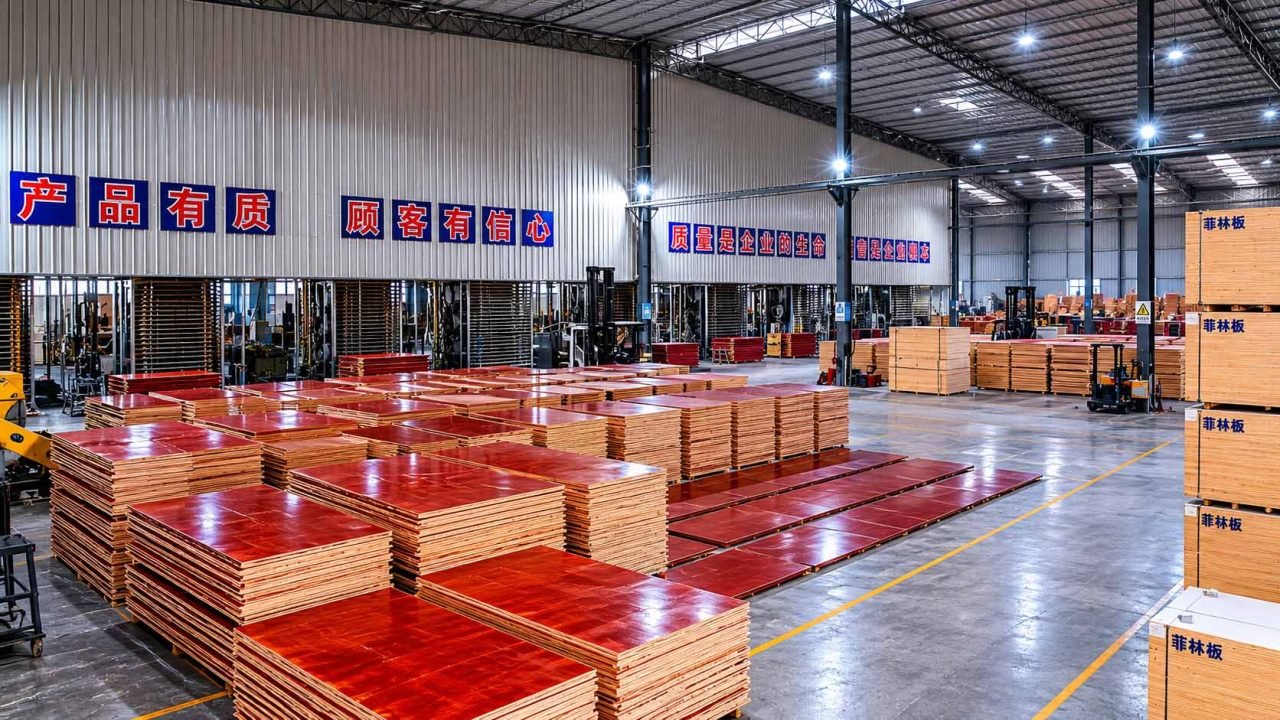
Q1: How does lateral hydrostatic pressure from high-slump self-consolidating concrete (SCC) induce surface bulging in wall formwork?
In modern high-rise core walls and deep infrastructure pours, pumping high-slump or self-consolidating concrete (SCC) at rates exceeding 3 to 5 vertical meters per hour generates intense lateral hydrostatic pressure against the form face. According to standard fluid mechanics and formwork design frameworks (such as DIN 18218 and ACI 347):
-
Hydrostatic Head Accumulation: Unlike low-slump concrete that achieves rapid internal particle interlocking, modern chemical admixtures delay initial cement set by 3 to 6 hours. During continuous vertical pumping, concrete acts as a dense fluid, generating peak lateral head pressures exceeding 60 to 85 kN per square meter near the base.
-
Elastic Bending and Surface Pillowing: When the form panel lacks adequate structural stiffness, high localized pressure causes elastic bending between vertical timber beams (H20 joists) or steel walers. If deflection exceeds L/400 or L/500 of the support span, the wall develops visible surface bulging (pillow effect), requiring costly mechanical concrete grinding after striking.
Q2: What panel thickness tolerances and core modulus of elasticity (MOE) eliminate wall deflection under peak hydraulic loads?
Maintaining wall straightness within strict architectural tolerances requires calculating bending stiffness (EI) and selecting proper wood densities:
Calculate Lateral Head Pressure -> Check Tie-Rod & Joist Spacing -> Calculate Panel Bending Stress -> Verify Allowable Deflection Limit (L/400) -> Select Dense Eucalyptus Plies
-
Cross-Laminated Elastic Modulus: Core species determine structural deflection resistance. Standard rotary-cut poplar core plywood delivers an average bending modulus (MOE) of 4,500 to 5,500 MPa. In contrast, high-density Guangxi eucalyptus veneers achieve an MOE exceeding 7,500 to 8,500 MPa along the grain, reducing out-of-plane deflection by up to 35% under identical load spans.
-
Calibrated Thickness Tolerances: In gang form assemblies, panels with uneven thickness create localized stress points and joint leaking. Precision sanding down to a tolerance of +/- 0.5mm prevents localized slurry blowout.
-
Engineered Multi-Cycle Heavy Panels: Heavy-load structural panels—such as 18mm heavy-duty film-faced plywood manufactured by NQ Formwork Plywood Co., Ltd.—utilize high-density cross-layered eucalyptus cores to resist lateral pressures up to 90 kN per square meter across 15 to 20 reuse cycles. For lighter horizontal slab decking, 12mm red formwork boards provide rigid, economical performance for 6 to 8 reuses.
To observe multi-cylinder hydraulic cold pressing and live deflection test procedures, watch our factory production video stream, review the company manufacturing overview, or request wall formwork calculation sheets.
🌐 Connect with NQ Formwork Plywood Co., Ltd.
-
Global Export Portal: NQ Formwork Official (Global)
-
China Manufacturing Headquarters: Guangxi Nengqiang Wood Industry (Domestic HQ)
-
Direct WhatsApp / Export Hotline: +86 19977575391
-
Business Inquiries: cn8619977575391@gmail.com
-
Factory Facility: Batang Industrial Park, Gangnan District, Guigang City, Guangxi, China
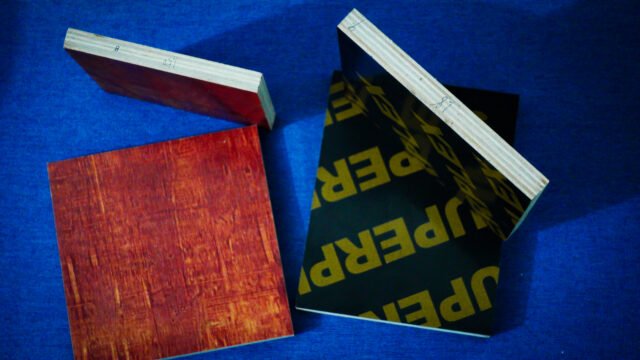
Q1: Why does cut-edge water absorption trigger localized thickness swelling and joint misalignment during repetitive pours?
While the top and bottom faces of shuttering plywood are sealed by dense phenolic film overlays, the four perimeter edges expose raw cross-cut wood fibers. In rotary-peeled eucalyptus and hardwood veneers, cutting exposes the longitudinal vascular bundles (xylem vessels), which behave like capillary tubes under hydraulic pressure:
-
Capillary Slurry Suction: When exposed to fresh concrete slurry with high water-cement ratios or standing jobsite rainwater, unprotected cut edges absorb moisture 3 to 5 times faster than the face film. Water quickly penetrates 20mm to 50mm into the interior core plies.
-
Differential Thickness Swelling: Wood cell walls expand perpendicular to the grain as moisture content climbs from the factory-calibrated 10% up to 25% or higher. This causes the panel edges to swell from 18.0mm to 19.5mm or 20.2mm, while the center panel stays at 18.0mm.
-
Formwork Joint Stepping and Grout Leakage: During subsequent wall and slab pours, adjacent panels with swollen edges no longer butt together flush. The resulting dimensional mismatch creates stepped concrete joints (“fins”), punctures the perimeter phenolic film, and allows wet cement slurry to bleed through the seams, leaving honeycombing along structural lines.
Q2: What factory edge-sealing chemistries and application standards ensure zero edge delamination?
Preventing edge swelling over 15 to 20 repetitive cycles requires a sealed polymeric barrier applied under factory conditions:
Precision Four-Sided Trimming -> Dust Extraction -> First-Coat Hydrophobic Acrylic Primer -> Flash-Off Drying -> Second-Coat Polyurethane Topcoat -> Heated Curing
-
Dual-Coat Polymer Chemistry: High-grade architectural panels utilize modified acrylic primers to penetrate and plug open tracheids, followed by a durable, flexible polyurethane or epoxy topcoat. This flexible barrier expands and contracts with minor panel movement without micro-cracking.
-
On-Site Resealing Discipline: Whenever boards are cut, drilled, or ripped on site to fit column corners or penetrations, carpenters must immediately brush two coats of waterproof edge sealant over the newly exposed wood before form erection.
-
Engineered Multi-Cycle Durability: High-grade panels—such as 18mm heavy-duty film-faced plywood manufactured by NQ Formwork Plywood Co., Ltd.—utilize factory-automated double-spray edge coating to deliver 15 to 20 reuse cycles without perimeter swelling or core stepping. For standard structural slabs, 12mm red formwork boards feature industrial waterproof resin sealing delivering 6 to 8 reuses.
To observe automated edge trimming and multi-coat spray operations, access the factory production video stream, study the company manufacturing overview, or request structural edge-sealing technical data.
🌐 Connect with NQ Formwork Plywood Co., Ltd.
-
Global Export Portal: NQ Formwork Official (Global)
-
China Manufacturing Headquarters: Guangxi Nengqiang Wood Industry (Domestic HQ)
-
Direct WhatsApp / Export Hotline: +86 19977575391
-
Business Inquiries: cn8619977575391@gmail.com
-
Factory Facility: Batang Industrial Park, Gangnan District, Guigang City, Guangxi, China
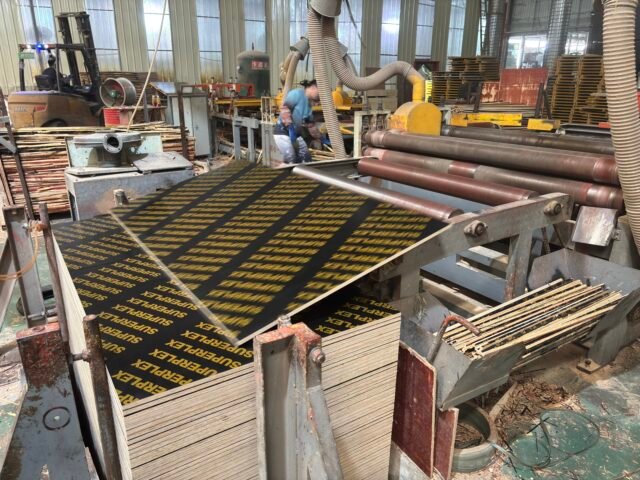
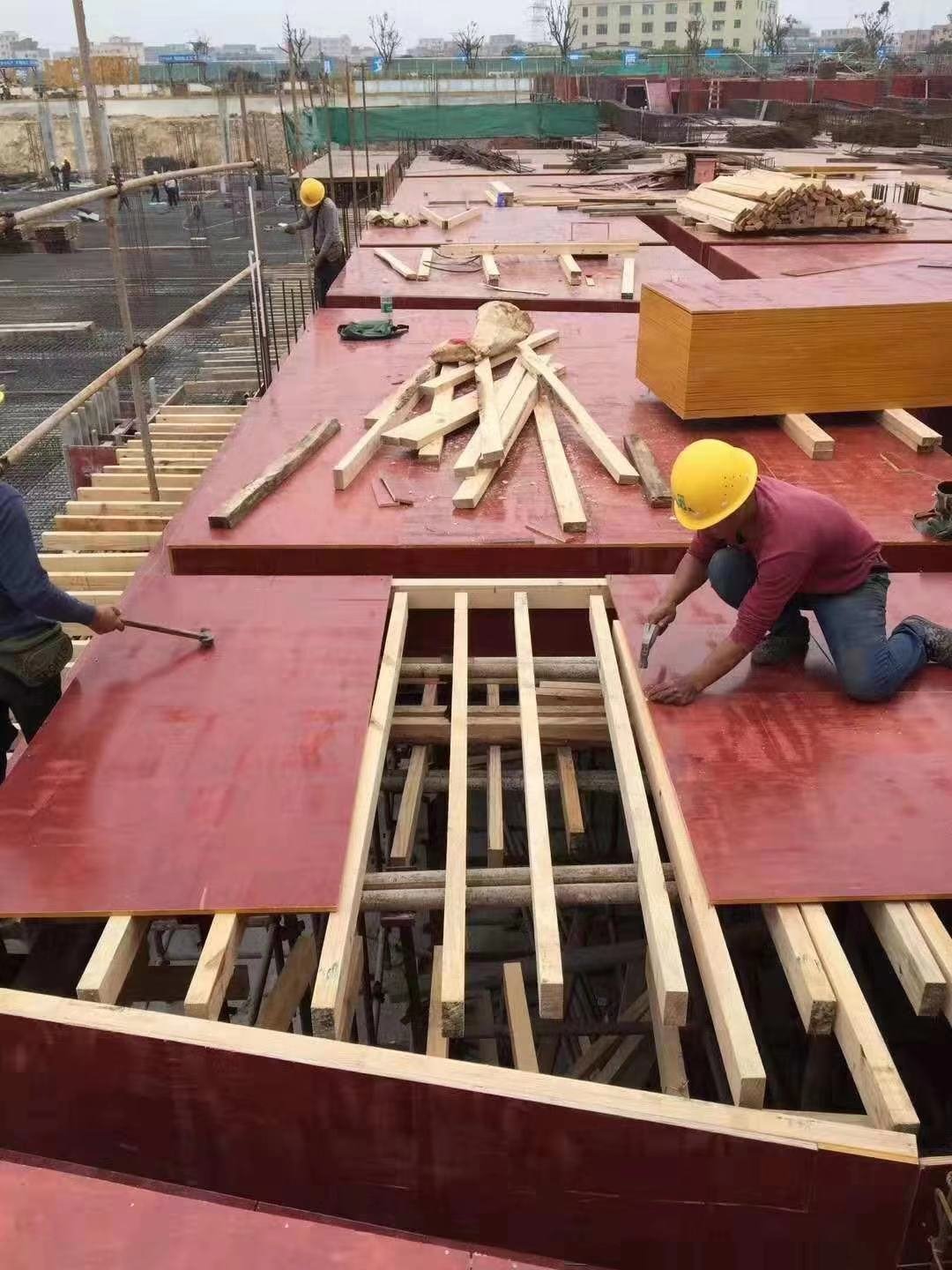
Thermal Expansion & Resin Stability: Formwork Performance Under 50 Degrees Celsius Desert Conditions
Q1: How does extreme ambient heat across Gulf job sites affect plywood dimensional stability and adhesive shear strength?
Civil engineering projects across Dubai, Abu Dhabi, and Riyadh regularly face summer daytime ambient temperatures above 45 to 50 degrees Celsius, with panel surface temperatures on steel-framed gang forms exceeding 70 degrees Celsius under intense solar radiation. Under these extreme conditions, inferior formwork boards suffer rapid structural degradation:
-
Differential Thermal Expansion: Poplar veneers and steel frames expand at mismatched rates. When low-density wood expands, internal tensions tear low-grade urea-formaldehyde glue lines, causing sudden surface wrinkling and edge splitting.
-
Polymer Embrittlement: Substandard surface films break down rapidly under ultraviolet (UV) exposure and intense radiant heat, resulting in micro-cracking and resin flaking before the first pour is placed.
High-density eucalyptus wood exhibits a significantly lower longitudinal thermal expansion coefficient compared to light softwoods, maintaining internal ply alignment under prolonged direct desert sunlight.
Q2: What panel specifications prevent thermal delamination and edge warping during Middle Eastern summer pours?
Specifying high-density core species and fully reacted phenolic bonding adhesives prevents structural degradation in arid zones:
Material Performance Comparison Under 50 Degrees Celsius Ambient Heat
| Performance Metric | Poplar Core Plywood | Mixed Hardwood Core | Dense Eucalyptus Multi-Ply |
| Volumetric Swelling Ratio | High (Unstable) | Moderate | Low (< 0.28%) |
| Glass Transition Temp (Tg) | < 110 degrees Celsius | ~ 130 degrees Celsius | > 155 degrees Celsius |
| Boil-Dry Shear Strength | Fails under 0.8 MPa | Approx. 1.0 MPa | Exceeds 1.25 MPa |
| UV Resistance Rating | Rapid Chalking & Peeling | Moderate | Stable (Heavy Phenolic) |
Engineered cross-laminated structural boards—such as 18mm heavy-duty film-faced plywood manufactured by NQ Formwork Plywood Co., Ltd.—utilize waterproof phenolic resin with a curing threshold well above desert heat limits. These panels provide 15 to 20 reuses on high-rise shear walls without edge delamination. For standard floor decks, 12mm red formwork boards provide 6 to 8 reliable pours.
To examine core lamination pressure lines and heat tolerance inspections, watch our factory live testing videos, check our corporate export credentials, or request direct factory container quotes.
🌐 Connect with NQ Formwork Plywood Co., Ltd.
-
Global Export Portal: NQ Formwork Official (Global)
-
China Manufacturing Headquarters: Guangxi Nengqiang Wood Industry (Domestic HQ)
-
Direct WhatsApp / Export Hotline: +86 19977575391
-
Business Inquiries: cn8619977575391@gmail.com
-
Factory Facility: Batang Industrial Park, Gangnan District, Guigang City, Guangxi, China
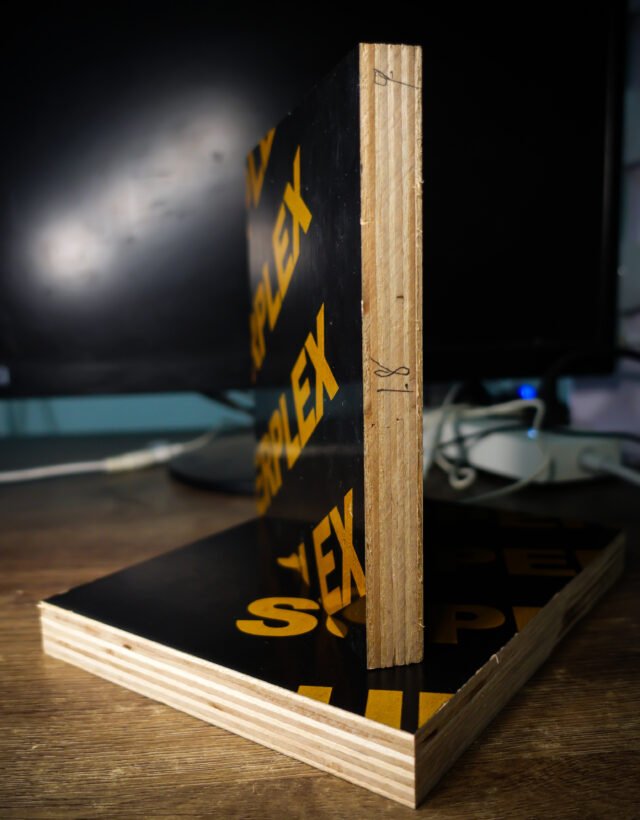

Q1: How do oil-based versus water-based chemical release agents interact with cured phenolic overlays?
In architectural and fair-face concrete construction, applying the incorrect chemical form release agent directly degrades the surface finish and damages the formwork overlay. Phenolic film consists of Kraft paper saturated with cross-linked thermosetting resin. While this non-porous polymer barrier resists water and basic concrete slurry, it remains sensitive to certain solvent formulations under sustained curing heat:
-
Solvent and Diesel-Based Agents: Traditional petroleum-based fuels or low-grade diesel oil mixtures dissolve residual surface wax and chemically soften the phenolic resin layer. During hydration—where core temperatures easily reach 60 to 70 degrees Celsius—dissolved hydrocarbon compounds migrate into the setting cement paste, causing irreversible dark staining, surface discoloration, and localized concrete dusting.
-
Water-Based Chemical Emulsions: Modern polymeric water-based emulsions react chemically with calcium hydroxide in fresh cement slurry to create an ultra-thin boundary film of non-greasy calcium soap. These agents leave zero chemical residue on the phenolic face, ensuring effortless stripping while preserving the smooth gloss of the panel.
Q2: What application standards ensure uniform concrete tone and extended shuttering life?
Achieving uniform color and preventing panel degradation requires strict chemical matching and calibrated application:
Panel Surface Dust Removal -> Atomized Spray Application -> Microfiber Squeegee Leveling (Zero Pooling) -> Reinforcement Fixing -> Concrete Pour
-
Eliminating Surface Puddling: Release agents must be applied with fine-mist atomizing sprayers at a coverage rate of 25 to 35 square meters per liter. Excess liquid pooling at form corners softens the phenolic overlay and generates localized bug holes in the cured wall.
-
Matching Board Density to Chemical Loads: High-density eucalyptus boards—such as 18mm heavy-duty film-faced plywood manufactured by NQ Formwork Plywood Co., Ltd.—feature impermeable resin barriers rated for 15 to 20 reuses when paired with water-based agents. For standard structural slabs, 12mm red formwork boards provide an economical 6 to 8 reuses without resin flaking.
To review automated surface film pressing and factory testing routines, watch our factory production video stream, inspect the company manufacturing overview, or request architectural formwork technical specifications.
🌐 Connect with NQ Formwork Plywood Co., Ltd.
-
Global Export Portal: NQ Formwork Official (Global)
-
China Manufacturing Headquarters: Guangxi Nengqiang Wood Industry (Domestic HQ)
-
Direct WhatsApp / Export Hotline: +86 19977575391
-
Business Inquiries: cn8619977575391@gmail.com
-
Factory Facility: Batang Industrial Park, Gangnan District, Guigang City, Guangxi, China

Q1: What key physical tolerances and bonding tests must be verified before container sealing at the factory dock?
For international civil contractors and building materials distributors importing containerized shuttering panels, verifying product compliance prior to container loading prevents costly jobsite disputes. A comprehensive factory pre-shipment audit covers five critical physical metrics:
-
Dimensional and Squareness Tolerances:
-
Length and Width: Strict tolerances of +/- 1.0mm measured across opposing edges.
-
Thickness Calibration: Sanded panels must fall within +/- 0.5mm across all four corners and the sheet center.
-
Diagonal Difference (Squareness): Maximum allowable diagonal variance must not exceed 2.0mm to prevent panel misalignment during modular wall assembly.
-
-
Core Delamination and Boiling Immersion Verification: Sample cuts (100mm x 100mm) must undergo mandatory continuous 100 degrees Celsius boiling tests:
-
Standard panels: 4 to 8 hours without edge separation.
-
High-tier phenolic panels: 24 to 72 hours with zero unglued plies.
-
-
Core Density and Moisture Content Thresholds: Internal veneer moisture must measure between 8% and 12%. Moisture levels above 14% cause localized panel swelling and internal steam delamination during transit through warm tropical shipping routes.
Q2: How does proper export container loading prevent ocean transit moisture and edge impact damage?
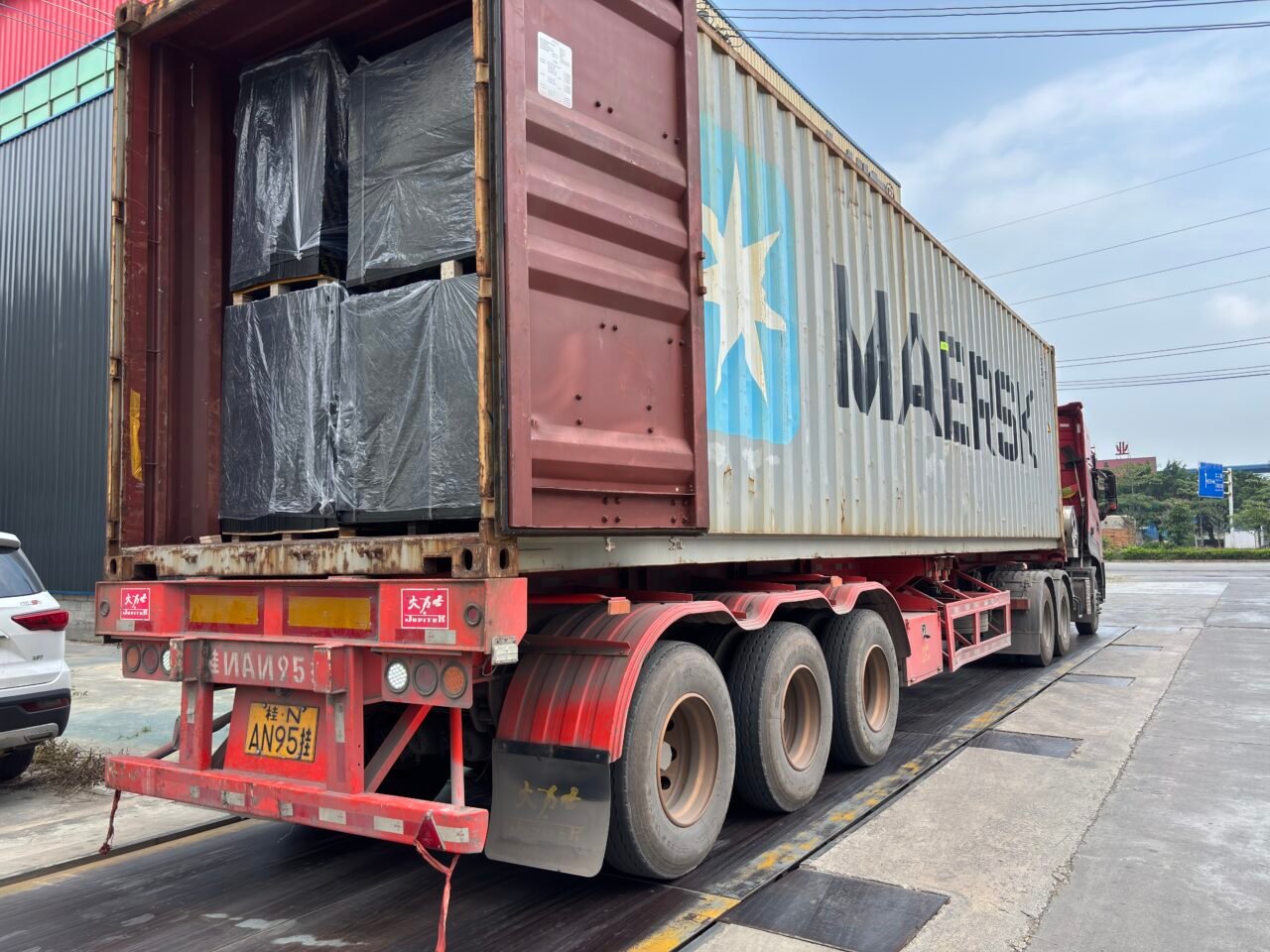
Maritime container transport across the Indian Ocean and Arabian Gulf exposes wood products to severe humidity shifts, ocean condensation (“container sweat”), and mechanical transport vibrations. Professional export protocols require active structural protection:
Palletized Bundling -> Edge Corner Protectors -> Full Plastic Shrink-Wrap -> Steel Strapping -> Desiccant Placement -> High-Cube Container Bracing
-
Full-Enclosure Plastic Film Wrapping: Every pallet bundle is wrapped in thick polyethylene plastic film to block high-salinity maritime humidity.
-
Reinforced Edge and Corner Protectors: Heavy-duty fiberboard corner guards are fitted along every external panel edge prior to high-tension steel or PET strapping. This prevents strap cutting into the panel edges during sudden vessel movements.
-
Desiccant Pack Distribution: Multiple high-absorption desiccant bags are suspended within the 40HQ container to absorb internal air humidity during day-night temperature swings.
By enforcing these strict export protocols, manufacturers such as NQ Formwork Plywood Co., Ltd. in Guangxi ensure that standard 12mm red boards (providing 6-8 reuses) and heavy-duty 18mm film-faced plywood (engineered for 15-20 reuses) arrive at destination ports in Dubai, Saudi Arabia, and Southeast Asia without edge crushing or fungal decay.
Review automated strapping and container stuffing operations on the NQ factory video channel, check the corporate manufacturing background, or request export logistics data.
🌐 Connect with NQ Formwork Plywood Co., Ltd.
-
Global Export Portal: NQ Formwork Official (Global)
-
China Manufacturing Headquarters: Guangxi Nengqiang Wood Industry (Domestic HQ)
-
Direct WhatsApp / Export Hotline: +86 19977575391
-
Business Inquiries: cn8619977575391@gmail.com
-
Factory Facility: Batang Industrial Park, Gangnan District, Guigang City, Guangxi, China