Working hours:Mon - Fri 9.00 - 18.00 Call Us: (+86) 19977575391

购物车

GET A QUOTE

News Center归档 - NQ Formwork Plywood Co., Ltd.

IMG_4607-1280x960.jpg

2026-09-110

Q1: How do oil-based versus water-based chemical release agents interact with cured phenolic overlays?

In architectural and fair-face concrete construction, applying the incorrect chemical form release agent directly degrades the surface finish and damages the formwork overlay. Phenolic film consists of Kraft paper saturated with cross-linked thermosetting resin. While this non-porous polymer barrier resists water and basic concrete slurry, it remains sensitive to certain solvent formulations under sustained curing heat:

  1. Solvent and Diesel-Based Agents: Traditional petroleum-based fuels or low-grade diesel oil mixtures dissolve residual surface wax and chemically soften the phenolic resin layer. During hydration—where core temperatures easily reach 60 to 70 degrees Celsius—dissolved hydrocarbon compounds migrate into the setting cement paste, causing irreversible dark staining, surface discoloration, and localized concrete dusting.

  2. Water-Based Chemical Emulsions: Modern polymeric water-based emulsions react chemically with calcium hydroxide in fresh cement slurry to create an ultra-thin boundary film of non-greasy calcium soap. These agents leave zero chemical residue on the phenolic face, ensuring effortless stripping while preserving the smooth gloss of the panel.

Q2: What application standards ensure uniform concrete tone and extended shuttering life?

Achieving uniform color and preventing panel degradation requires strict chemical matching and calibrated application:

Panel Surface Dust Removal -> Atomized Spray Application -> Microfiber Squeegee Leveling (Zero Pooling) -> Reinforcement Fixing -> Concrete Pour
  • Eliminating Surface Puddling: Release agents must be applied with fine-mist atomizing sprayers at a coverage rate of 25 to 35 square meters per liter. Excess liquid pooling at form corners softens the phenolic overlay and generates localized bug holes in the cured wall.

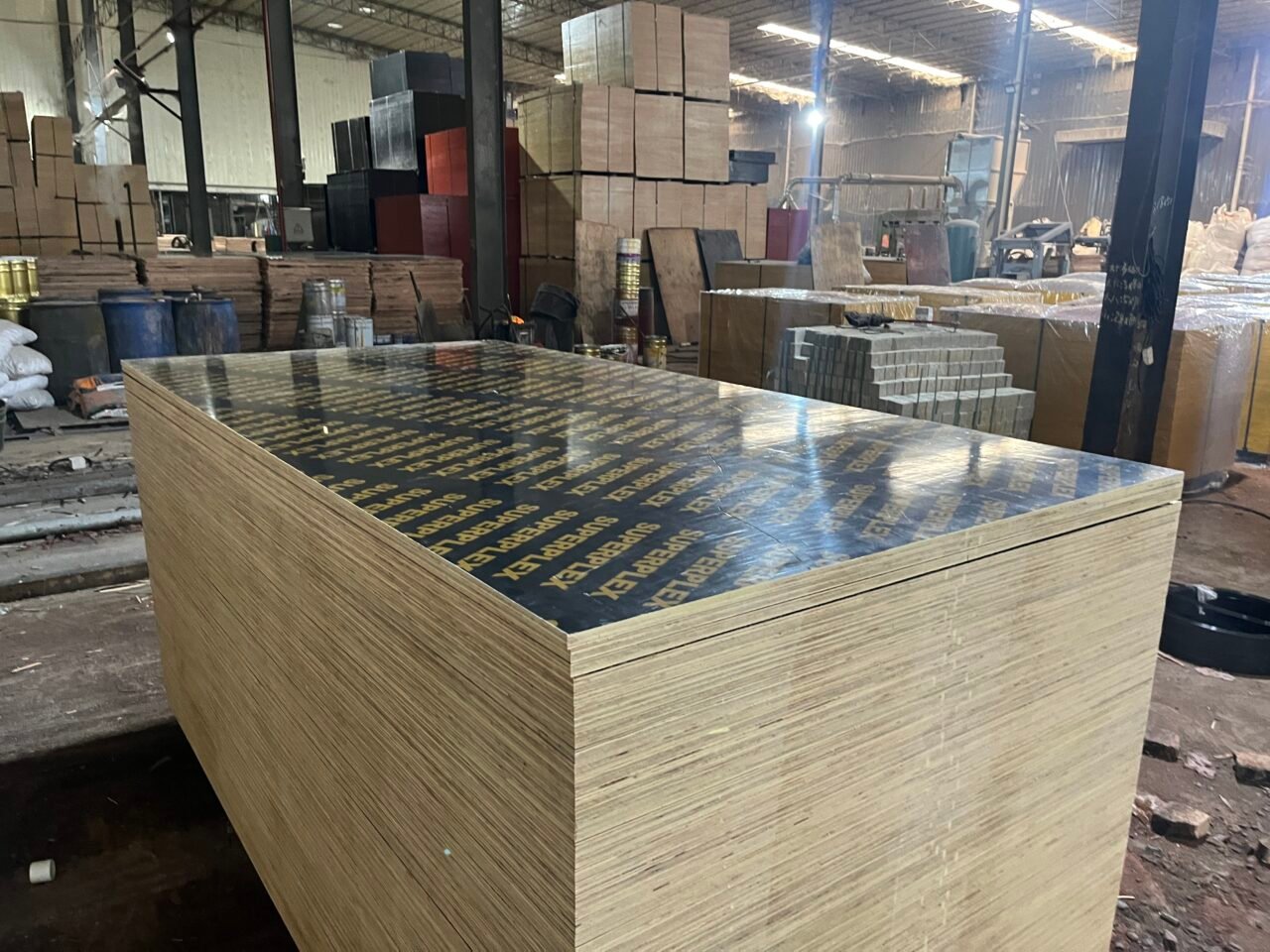
  • Matching Board Density to Chemical Loads: High-density eucalyptus boards—such as 18mm heavy-duty film-faced plywood manufactured by NQ Formwork Plywood Co., Ltd.—feature impermeable resin barriers rated for 15 to 20 reuses when paired with water-based agents. For standard structural slabs, 12mm red formwork boards provide an economical 6 to 8 reuses without resin flaking.

To review automated surface film pressing and factory testing routines, watch our factory production video stream, inspect the company manufacturing overview, or request architectural formwork technical specifications.

🌐 Connect with NQ Formwork Plywood Co., Ltd.


IMG_5551-1280x960.jpg

2026-09-100

Q1: What key physical tolerances and bonding tests must be verified before container sealing at the factory dock?

For international civil contractors and building materials distributors importing containerized shuttering panels, verifying product compliance prior to container loading prevents costly jobsite disputes. A comprehensive factory pre-shipment audit covers five critical physical metrics:

  1. Dimensional and Squareness Tolerances:

    • Length and Width: Strict tolerances of +/- 1.0mm measured across opposing edges.

    • Thickness Calibration: Sanded panels must fall within +/- 0.5mm across all four corners and the sheet center.

    • Diagonal Difference (Squareness): Maximum allowable diagonal variance must not exceed 2.0mm to prevent panel misalignment during modular wall assembly.

  2. Core Delamination and Boiling Immersion Verification: Sample cuts (100mm x 100mm) must undergo mandatory continuous 100 degrees Celsius boiling tests:

    • Standard panels: 4 to 8 hours without edge separation.

    • High-tier phenolic panels: 24 to 72 hours with zero unglued plies.

  3. Core Density and Moisture Content Thresholds: Internal veneer moisture must measure between 8% and 12%. Moisture levels above 14% cause localized panel swelling and internal steam delamination during transit through warm tropical shipping routes.

Q2: How does proper export container loading prevent ocean transit moisture and edge impact damage?

Maritime container transport across the Indian Ocean and Arabian Gulf exposes wood products to severe humidity shifts, ocean condensation (“container sweat”), and mechanical transport vibrations. Professional export protocols require active structural protection:

Palletized Bundling -> Edge Corner Protectors -> Full Plastic Shrink-Wrap -> Steel Strapping -> Desiccant Placement -> High-Cube Container Bracing
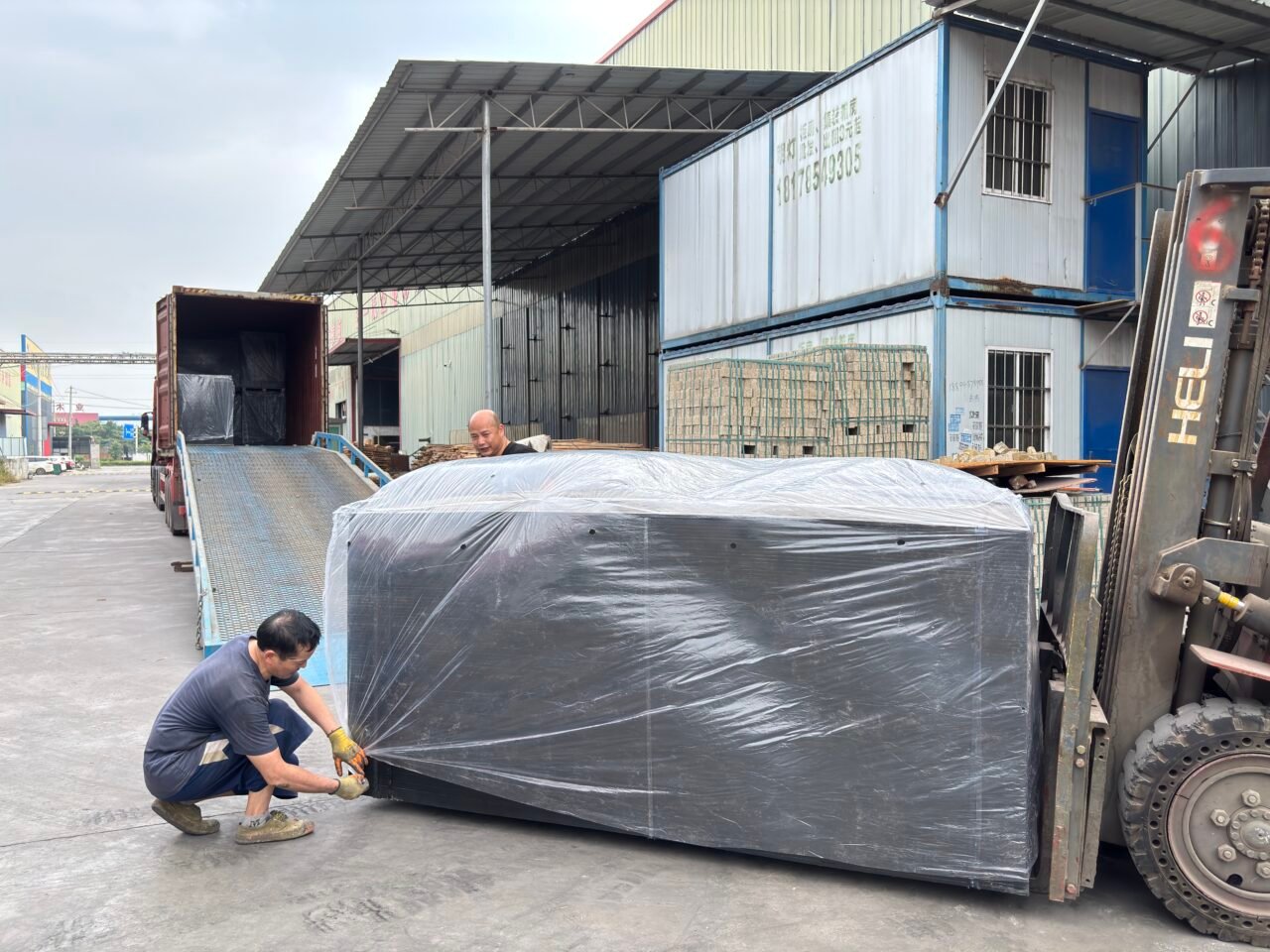
  • Full-Enclosure Plastic Film Wrapping: Every pallet bundle is wrapped in thick polyethylene plastic film to block high-salinity maritime humidity.

  • Reinforced Edge and Corner Protectors: Heavy-duty fiberboard corner guards are fitted along every external panel edge prior to high-tension steel or PET strapping. This prevents strap cutting into the panel edges during sudden vessel movements.

  • Desiccant Pack Distribution: Multiple high-absorption desiccant bags are suspended within the 40HQ container to absorb internal air humidity during day-night temperature swings.

By enforcing these strict export protocols, manufacturers such as NQ Formwork Plywood Co., Ltd. in Guangxi ensure that standard 12mm red boards (providing 6-8 reuses) and heavy-duty 18mm film-faced plywood (engineered for 15-20 reuses) arrive at destination ports in Dubai, Saudi Arabia, and Southeast Asia without edge crushing or fungal decay.

Review automated strapping and container stuffing operations on the NQ factory video channel, check the corporate manufacturing background, or request export logistics data.

🌐 Connect with NQ Formwork Plywood Co., Ltd.


c6b9daa6ced87b6ad5044ec562bbc35e.jpeg

2026-09-090

Q1: What is the mechanical difference between 120g/m² and 240g/m² phenolic overlays on concrete formwork?

The outer protective layer on high-grade film-faced plywood is an engineered Kraft paper impregnated with thermosetting phenolic resin. Film thickness and resin content are universally classified by basis paper weight: 120g/m² and 240g/m² (or double-layer treated papers).

Material Science Differences
  1. Resin Saturation Index: A 120g/m² film carries roughly 60–70 grams of cured phenolic resin per square meter, forming a 0.12mm waterproof film. A 240g/m² heavy-duty film carries over 130 grams of cured resin, creating an impenetrable polymer barrier over 0.22mm thick.

  2. Taber Abrasion Resistance: Under standardized ASTM Taber abrasive testing (CS-17 wheels, 1,000g load):

    • 120g/m² standard film sustains 350 to 500 abrasion cycles before wood fibers show through.

    • 240g/m² heavy-duty film sustains 800 to 1,200 abrasion cycles, providing superior endurance against aggregate scraping during high-slump concrete vibrations.

Q2: How do civil contractors match film specifications to specific concrete finish requirements?

Matching overlay weight to project parameters prevents overspending on secondary plastering:

Overlay Engineering Application Matrix
Project Requirement Recommended Film Grade Core Configuration Reusability Horizon
Standard Residential Slabs Resin Paint / 120g/m² Film 12mm Red Board 6 – 8 Reuses
Commercial Fair-Face Concrete 120g/m² Phenolic Overlay 15mm–18mm Eucalyptus 10 – 12 Reuses
High-Rise Core Walls & Piers 240g/m² Heavy Phenolic 18mm Heavy-Duty Plywood 15 – 20 Reuses
Bridge Abutments & Dams 240g/m² Double-Coated 20mm Custom Engineered 15 – 20 Reuses

For civil engineering contractors across Dubai, Saudi Arabia, and the Philippines, utilizing 240g/m² overlays on 18mm heavy-duty panels manufactured by NQ Formwork Plywood Co., Ltd. eliminates concrete slurry water absorption. This guarantees a mirror-smooth architectural concrete surface that requires zero secondary cement skimming or plastering.

Review daily film hot-pressing quality controls by watching our factory live production videos, browse our complete formwork catalog, or request direct factory container pricing.

🌐 Connect with NQ Formwork Plywood Co., Ltd.


050.jpg

2026-09-080

Q1: Why do formwork panels fail around tie-rod sleeves and perimeter clamps during continuous climbing pours?

In self-climbing formwork (SCF) and crane-lifted gang forms used across high-rise towers in Dubai, Riyadh, and Doha, formwork panels experience severe concentrated mechanical shear around tie-bolt holes and perimeter steel frame clamps. When fresh concrete is placed, tension along through-tie rods can reach 40 to 90 kN depending on wall thickness and pour rate.

Panel failure in these zones typically occurs through two mechanisms:

  1. Localized Bearing Crushing: Low-density core veneers (such as light poplar or uncompressed mixed woods) have low perpendicular-to-grain compressive strength. The washer plate or clamp crushes into the outer plies, puncturing the phenolic film and allowing water ingress.

  2. Screw Strip-Out (Withdrawal Failure): During stripping and lifting cycles, wind vibrations and crane lifting forces exert cyclic pulling loads on the countersunk screws securing the plywood to the steel framing. Low-density veneers strip their wood threads easily, causing perimeter detachment.

Q2: How does core density determine fastener retention and edge durability in heavy-duty formwork?

Screw holding capacity is directly proportional to wood density squared. Engineering high-load climbing systems requires specific wood species and cross-ply configurations:

Fastener Mechanical Performance by Core Type
Mechanical Parameter Poplar Core (Low Density) Southern Mixed Hardwood Dense Eucalyptus Multi-Ply
Average Density 430–480 kg/m³ 520–580 kg/m³ 620–680 kg/m³
Face Screw Withdrawal ~1,100 N ~1,450 N > 1,950 N
Edge Screw Withdrawal ~850 N ~1,100 N > 1,500 N
Tie-Hole Bearing Strength Moderate / Prone to Crushing High Superior Shear Resistance

By using full-sheet Southern Eucalyptus veneers bonded under high-pressure thermal cycles, structural panels—such as 18mm heavy-duty film-faced plywood manufactured by NQ Formwork Plywood Co., Ltd.—resist perimeter screw strip-out and provide 15 to 20 reuse cycles in climbing systems without hole elongation. For lower-load horizontal applications, 12mm red formwork boards offer an economical 6 to 8 reuses.

To observe factory tie-rod hole drilling tolerances and panel strength tests, access the factory daily video library, review the company background, or consult export structural specialists.

🌐 Connect with NQ Formwork Plywood Co., Ltd.

default

DSC04324-1280x720.jpg

2026-09-070

Q1: How does uneven veneer moisture content cause internal steam blistering during high-temperature hot pressing?

In industrial plywood manufacturing, veneer moisture control is the single most critical variable determining internal bond strength. When raw eucalyptus logs are rotary-peeled into 1.5mm–2.2mm veneers, natural green moisture levels often exceed 40% to 60%. If veneers are insufficiently dried before assembly—or if ambient humidity introduces uneven moisture pockets—moisture content will exceed the safe threshold of 8% to 12%.

During the hydraulic hot-pressing phase, steel platens apply continuous heat (125℃ to 140℃) under pressures exceeding 2.0 to 2.5 MPa to cure the phenolic resin. If core veneers retain excessive moisture, this water instantly vaporizes into high-pressure steam trapped within the tight wood plies. Because phenolic resin requires moisture-free conditions to complete cross-linked polycondensation, the localized steam pressure dilutes the resin solids and physically blows apart the adhesive layer. When the press decompresses, these steam pockets expand rapidly, creating internal blisters, unbonded voids, and latent delamination zones that are invisible from the outside but fail under the first concrete pour.

Q2: What drying and pressing protocols ensure maximum structural bonding in commercial shuttering boards?

Leading industrial manufacturers in regional timber clusters eliminate steam blistering through continuous automated drying and calibrated multi-stage pressure release:

Roller Jet Drying (<10% Moisture) ➔ Double-Sided Resin Roll-Coating ➔ Cold Pre-Press ➔ High-Pressure Hot Pressing ➔ Gradual Decompression
  1. Continuous Roller Jet Drying: Veneers pass through multi-deck roller dryers with circulating hot air, reducing moisture variance to within ± 1.5\% across every sheet.

  2. Gradual Decompression Cycles: Hydraulic presses utilize micro-stepped pressure reduction cycles during the final 30 seconds of pressing, allowing residual microscopic steam to vent safely before platens open.

  3. Optimized Structural Durability: Controlling internal moisture ensures that structural panels—including 12mm red formwork boards (rated for 6–8 reuses) and heavy-duty 18mm film-faced plywood (delivering 15–20 reuses) produced by NQ Formwork Plywood Co., Ltd.—maintain shear bond strength exceeding 1.2 MPa under severe boiling water tests.

To examine industrial roller drying and press line operations, review the NQ factory video stream, study the corporate manufacturing overview, or request structural plywood technical data.

🌐 Connect with NQ Formwork Plywood Co., Ltd.


敲板区1-1-拷贝-1280x720.jpg

2026-09-040

Q1:What chemical reactions occur between wet alkaline concrete and shuttering adhesives under 45°C+ Middle Eastern desert temperatures?

Fresh concrete paste is a harsh chemical environment with a pH between 12.5 and 13.5, driven by calcium hydroxide ($\text{Ca(OH)}_2$) generated during cement hydration. In high-temperature conditions common across Saudi Arabia, Qatar, and the UAE—where surface temperatures on metal and wood formwork frequently exceed 50°C—chemical degradation accelerates:

  1. Alkaline Hydrolysis (Saponification): Standard ester-based adhesives and poorly formulated urea resins undergo alkaline hydrolysis. Hydroxide ions ($\text{OH}^-$) attack the polymer backbone, breaking cross-linked chains and turning adhesive bonds into soft, non-cohesive compounds.

  2. Moisture Differential Stress: Extreme ambient evaporation pulls water out of the inner plies toward the exposed edges, while the face panel absorbs alkaline slurry water. This creates high shear stress across the glue line, resulting in edge ungluing and veneer splitting.

Q2: Why does a fully cured phenolic surface film prevent panel saponification and surface dusting?

Phenolic formaldehyde resins form a tightly cross-linked three-dimensional polymer network during high-temperature thermal pressing ($>135^\circ\text{C}$).

Protective Mechanisms of Phenolic Overlays
  • Chemical Inertness: Fully cured phenolic resin resists saponification from calcium hydroxide solutions, creating an impermeable barrier between wet concrete and internal wood plies.

  • Controlled Water Retention: The dense film prevents the dry wooden core from rapidly absorbing hydration water out of the fresh concrete surface. This allows concrete along the formwork face to cure evenly, eliminating dusting, scaling, and cosmetic discoloration.

  • Extended Multi-Pour Integrity: High-solid phenolic surface coatings allow panels—such as standard 12mm red boards (rated for 6–8 reuses) and heavy-duty 18mm phenolic panels (rated for 15–20 reuses) produced by NQ Formwork Plywood Co., Ltd.—to strip cleanly pour after pour without degrading the underlying core.

To review daily thermal-press monitoring and laboratory boiling immersion procedures, browse our factory video channel, check our company background, or consult our export engineering desk.

🌐 Connect with NQ Formwork Plywood Co., Ltd.


11142134e57s.jpg

2026-09-030

Q1: Why does Guangxi (Guigang) dominate over 60% of China’s high-grade construction formwork manufacturing?

Guangxi’s dominance in the global wood-based panel industry is anchored in a continuous industrial supply chain, favorable forestry conditions, and deep-water river port logistics. Guigang, located along the Xijiang River basin, processes millions of cubic meters of fast-growing structural timber annually.

Key industrial advantages include:

  1. Raw Material Proximity: Fast-growing eucalyptus plantations reach harvest maturity within 5 to 6 years, providing a consistent supply of dense, straight-grained structural veneers within a 50 km radius of manufacturing clusters.

  2. Integrated Veneer-to-Panel Ecosystem: In industrial zones like Batang Industrial Park, processing plants combine rotary peeling, roller-drying, adhesive synthesizing, hot-pressing, and edge-profiling into a continuous 24-hour manufacturing cycle.

  3. Barge-to-Ocean Port Freight: Factories situated within 2 km of Guigang Port utilize direct inland river barges connecting to ocean hubs in Guangzhou and Shenzhen, reducing inland transport expenses compared to landlocked production bases.

Q2: How does Southern Eucalyptus timber cell density compare with Northern Poplar in concrete load-bearing applications?

Selecting between eucalyptus-core and poplar-core shuttering plywood directly determines structural deflection during concrete casting.

Structural Timber Mechanics Comparison
Physical / Mechanical Property Southern Eucalyptus (Guangxi Core) Northern Poplar (Standard Core) Engineering Impact on Jobsite
Air-Dry Wood Density 600 – 680 kg/m³ 420 – 480 kg/m³ Eucalyptus provides ~40% higher resistance to fastener pull-out and edge crushing.
Modulus of Elasticity (MOE) 9,500 – 11,500 MPa 6,000 – 7,500 MPa Drastically reduces sagging when pouring 200mm+ suspended slabs.
Phenolic Adhesive Uptake Controlled, Uniform High / Over-absorbent Poplar absorbs excess glue into pores, causing dry bond lines unless resin volumes are elevated.
Primary Durability Tier 18mm Heavy Panels (15–20 Reuses) Light Panels (3–5 Reuses) Eucalyptus cores maintain ply cohesion through repeated wet-dry cycles.

For contractors managing infrastructure projects in Dubai, Saudi Arabia, or Southeast Asia, using high-density eucalyptus formwork manufactured by integrated facilities like NQ Formwork Plywood Co., Ltd. ensures minimal wall deflection and predictable reusability.

🌐 Connect with NQ Formwork Plywood Co., Ltd.


008.jpg

2026-09-020

Experienced procurement auditors and structural site engineers utilize three non-destructive field inspection methods:

1. Acoustic Hammer Tapping  ➔  2. Cross-Section Kerf Inspection  ➔  3. Jobsite Boiling Cut-Test
1. The Acoustic Percussion Test (Acoustic Hammer Inspection)

Inspectors tap the panel surface across a 100mm grid using a small steel inspection hammer or the flat edge of a wrench.

  • Solid Core Resonance: Produces a crisp, high-pitched, uniform metallic sound.

  • Defect / Void Acoustic Profile: Produces a dull, hollow thud, indicating unglued veneer patches, core separation, or rotten inner plies.

2. Cross-Section Kerf Inspection

By taking a 50mm saw cut from the center of a sample sheet, inspectors inspect the cut edge under magnification:

  • High-grade assembly: Plies display uniform thickness across the entire cross-section, with parallel glue lines and tight core butt-joints (<1mm gap).

  • Substandard assembly: Uneven core ply thickness, visible gaps, overlapping veneers (which create stress concentrations), and unpressed loose core layers.

3. Field 4-Hour Boiling Rapid Check

Immersing a 100×100mm sample into boiling water at 100°C for 4 hours reveals adhesive resilience:

  • Panels bonded with interior urea glues disintegrate within 30 to 60 minutes.

  • High-performance panels—such as the standard 12mm red boards (delivering 6–8 reuses) and heavy-duty 18mm film-faced plywood (engineered for 15–20 reuses) produced by regional manufacturers like NQ Formwork Plywood Co., Ltd. in Guangxi—retain full structural bonding strength and edge integrity due to in-house formulated phenolic resins.

Technical inspection videos and daily hot-pressing quality controls can be viewed directly via the NQ factory video stream. For detailed manufacturing specifications, consult the corporate profile or submit engineering inquiries.

🌐 Connect with NQ Formwork Plywood Co., Ltd.


DSC04330-1280x720.jpg

2026-09-010

Core failures during rapid concrete placement are almost always mechanical rather than cosmetic. When self-compacting concrete is pumped into vertical column or shear-wall formwork, lateral hydrostatic pressure can exceed 60 to 80 kPa. If the internal plywood core contains unglued pockets, veneer gaps exceeding 3mm, or unseasoned core plies with excessive moisture content (>14%), structural shear failure occurs.

Under thermal pressure generated by cement hydration (which easily reaches 50°C to 65°C inside dense pours), trapped moisture within core voids turns into localized steam pockets. This expands internal air pockets, shearing the adhesive bond line between adjacent plies. The result is instant panel deflection, surface bulging, or catastrophic blowouts on the jobsite.


1597385024SaZzxq-1280x960.jpg

2026-08-270

For procurement directors managing multi-million-dollar infrastructure projects in the Middle East and Southeast Asia, selecting a reliable Chinese formwork manufacturer requires evaluating factory production capacity, raw material control, and testing protocols. NQ Formwork Plywood Co., Ltd. provides a transparent framework for international engineering audits.

Five Pillars of a Comprehensive Factory Audit
  1. Integrated In-House Adhesive Production: Does the manufacturer buy generic commercial glues, or do they synthesize their own resins? NQ Formwork produces proprietary phenolic adhesives in-house, ensuring solid-content consistency across every batch.

  2. Automated Veneer Drying & Core Assembly: Consistent moisture content (<10%) in wood veneers prevents internal blistering and delamination during high-temperature hot pressing.

  3. Daily Output & Scaling Capabilities: Operating across a 60,000 m² facility with 300+ workers, NQ Formwork achieves a daily output of 30,000 sheets, guaranteeing on-time full-container dispatch.

  4. Standardized Laboratory Testing (Boiling Tests): Mandatory 100°C boiling tests ensure panels achieve 6 to 8 reuses on 12mm red boards and 15 to 20 reuses on 18mm heavy-duty film-faced panels.

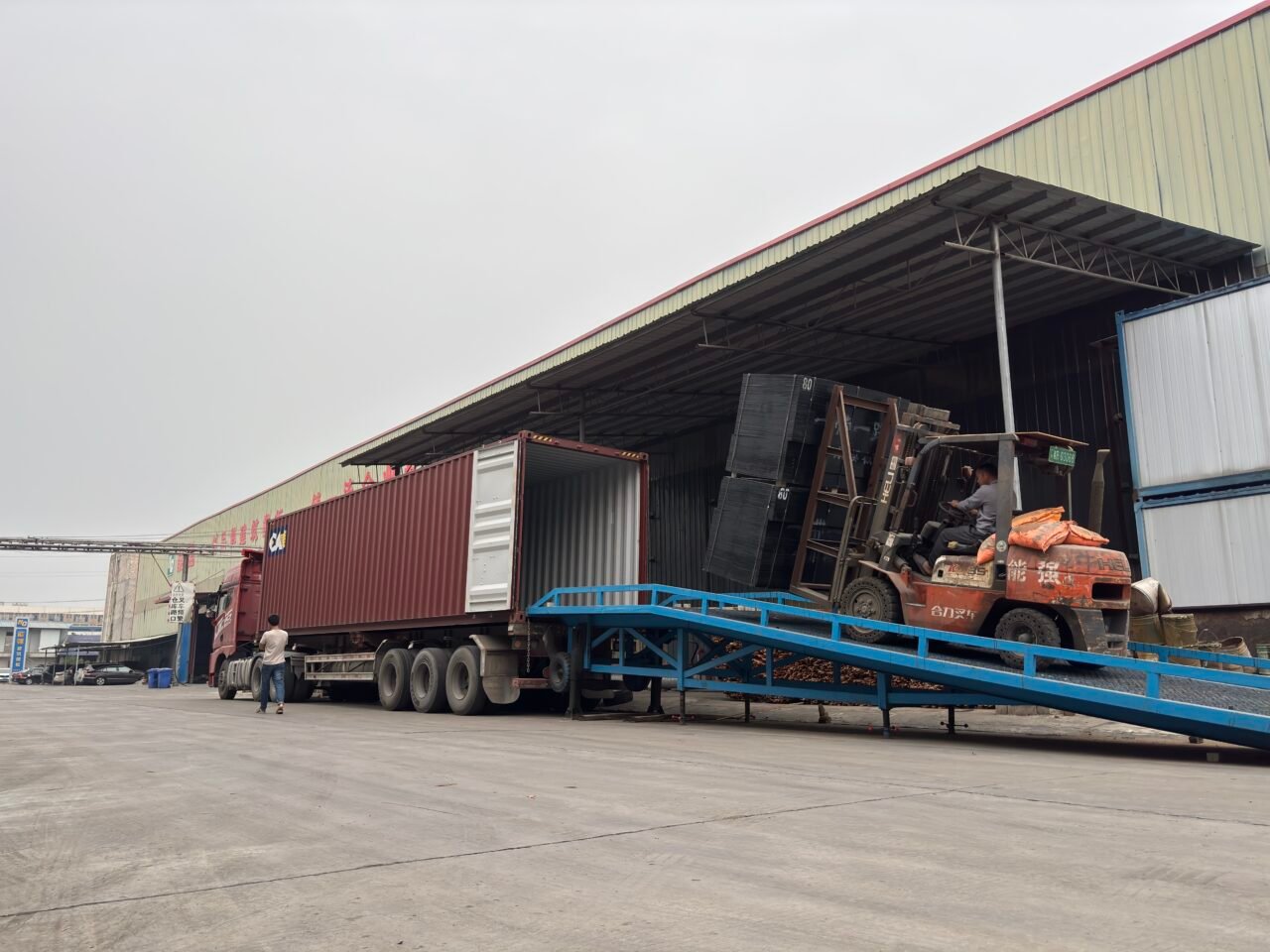
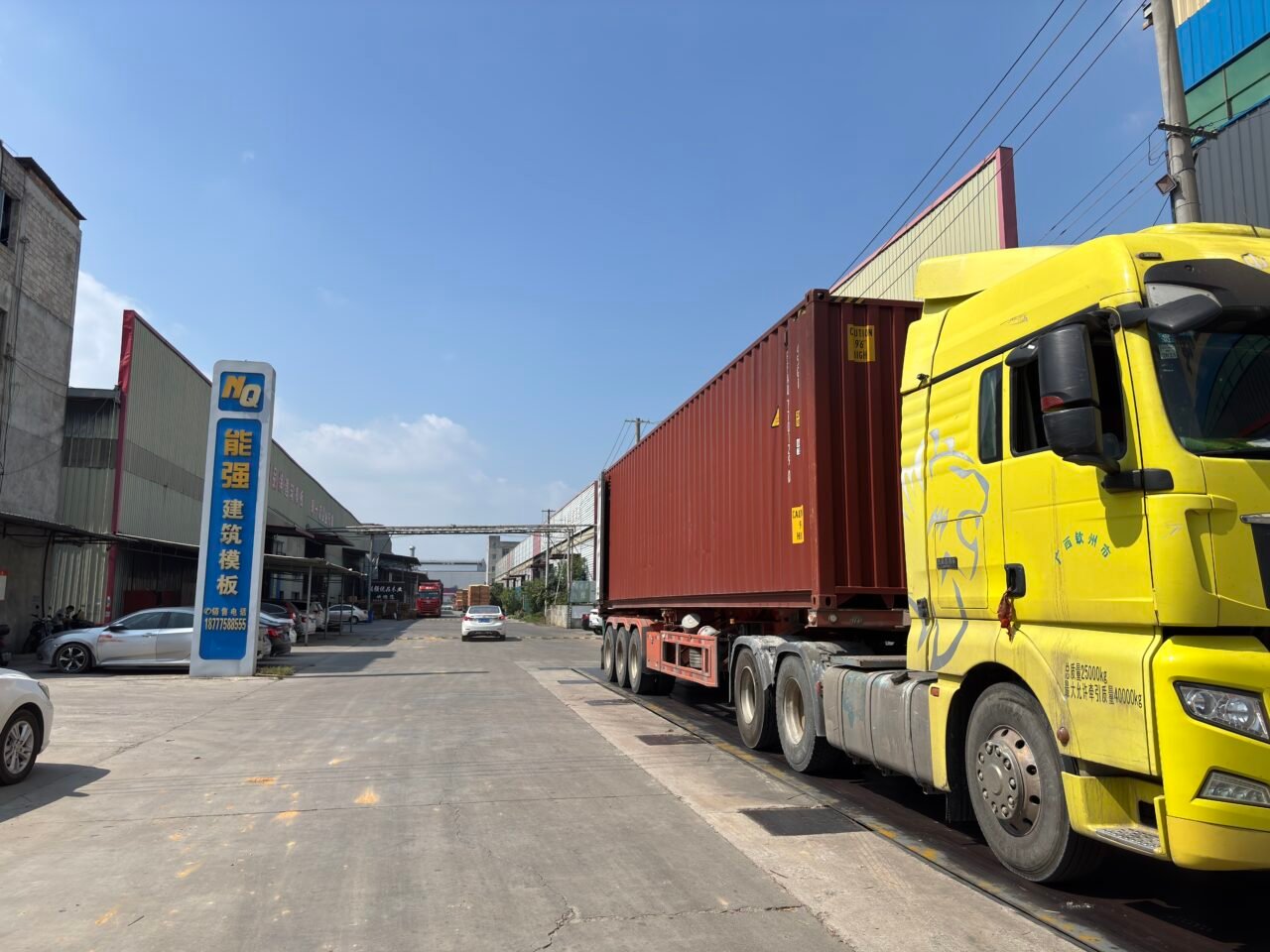
  5. Direct Maritime Export Access: Located 2 km from Guigang Port, we load containers directly at the factory dock to lower domestic logistics costs.

Review our full formwork product catalog, watch our daily operations stream, or schedule a factory audit with our export management team.

🌐 Connect with NQ Formwork Plywood Co., Ltd.


GUIGANG, CHINA

NQ Formwork Plywood

Located in China’s premier timber hub, NQ Formwork Plywood brings 27 years of manufacturing excellence. With a 60,000 m² facility and 300+ workers, we deliver 2M+ sheets annually to global construction projects.
+86 199 7757 5391

www.nqformwork.com

cn8619977575391@gmail.com

GET IN TOUCH

Request A Quote

Partner with China’s leading formwork factory. Tell us your project needs, and our export team will respond within 24 hours.