
How to Choose Quality Formwork Plywood: A Contractor’s Guide to Film Faced Plywood Core Materials and Specifications
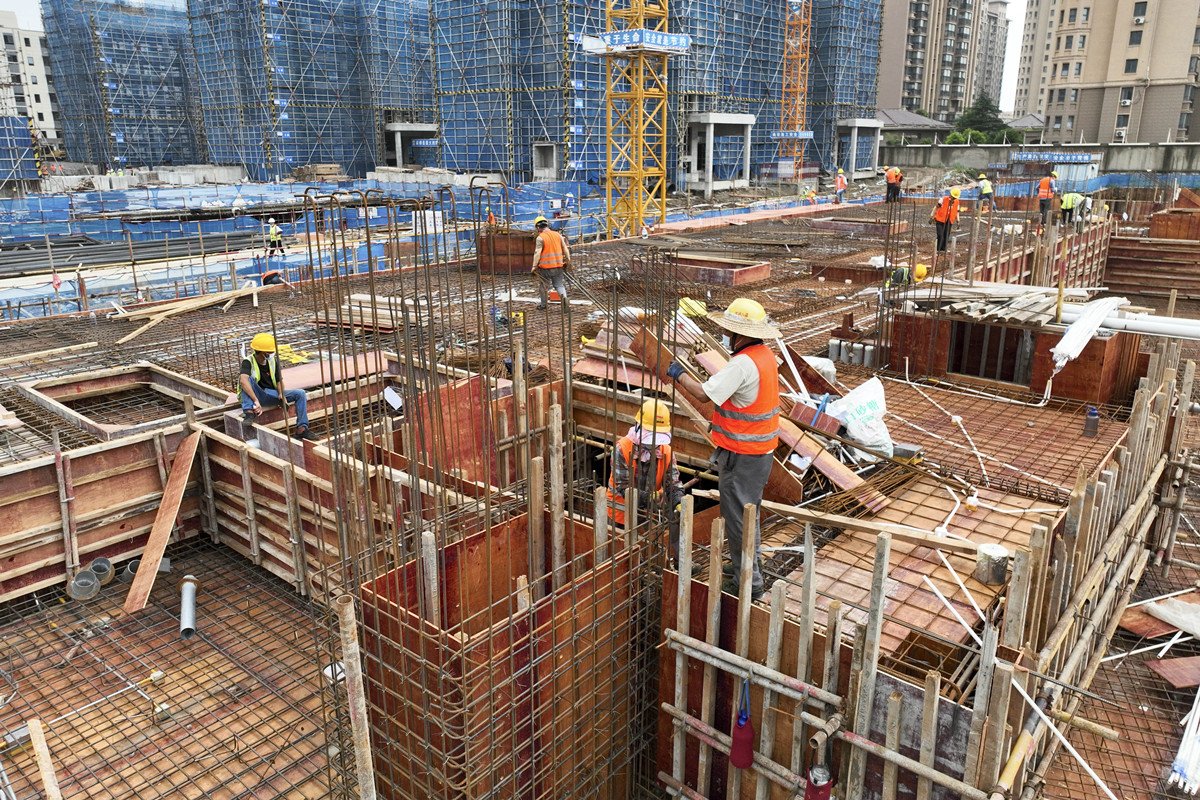
In commercial concrete construction, formwork accounts for a substantial portion of structural pacing and safety. Selecting substandard shuttering panels often leads to joint slurry leakage, surface bulging, premature delamination, and costly concrete chipping after striking.
With dozens of formwork plywood options circulating in the global market, civil engineering contractors and commercial procurement managers need clear benchmarks to distinguish high-performance panels from low-grade alternatives. Understanding core veneer species, adhesive bonding, and specification gradients is essential to securing reliable panels for jobsite pours.
1. Identifying the Core Material: Eucalyptus, Pine, Poplar, and Recycled Wood
The internal veneer composition dictates a panel’s load-bearing stiffness, screw-holding strength, and resistance to repeated hydrostatic head pressures.
-
Grade-A Eucalyptus & Pine Core (Heavy-Duty Engineering Standard): Fast-growing southern eucalyptus veneers possess high cellular density (580 to 640 kg/m3), delivering an exceptional modulus of elasticity and rupture. When combined with tough pine surface veneers in a cross-laminated structure, the board resists flexural cracking under high-pressure pumping, preventing wall bulging.
-
Northern Poplar Core (Lightweight Framing): Poplar wood is naturally softer and less dense (around 420 to 480 kg/m3). While lighter to handle on manual residential decks, standard poplar boards offer lower screw withdrawal resistance and higher deflection under heavy vertical wall pressures.
-
Recycled Finger-Joint Scrap Core (High Failure Risk): Manufactured from fragmented jobsite plywood off-cuts and secondary cold-press glue, finger-joint boards conceal internal air voids and lack continuous grain fibers. Under the hydraulic shock of fresh concrete, these panels frequently fracture or cave in after just 1 to 2 pours.
2. Film Faced Plywood vs. Red Phenolic Board: Matching the Surface to the Pour
Surface coatings define the final architectural texture of cured concrete and determine edge protection against wet cement alkalinity.
-
Black Film Faced Plywood (Shuttering Plywood): Hot-pressed with high-density phenolic resin-impregnated paper (120g/m2), this panel forms an impermeable shield against abrasive slurry. The cured concrete surface is mirror-smooth (fair-face concrete), eliminating the need for secondary wall plastering. It is ideal for bridge piers, high-rise shear walls, and elevator shafts requiring 8 to 20 reuse cycles.
-
Red Phenolic Formwork Board: Coated on both faces with an acrylic-phenolic waterproof resin paint, red panels protect raw veneers while leaving a subtle micro-texture on demolded concrete. This surface profile creates a natural bond for secondary cement mortar rendering and tile adhesives. For horizontal slab soffits and foundation beams requiring 6 to 15 reuses, red formwork provides high rigidity at lower procurement costs.
3. Four Practical On-Site Methods to Inspect Formwork Plywood Quality
Before signing off on full container shipments, site inspectors can verify board integrity using four straightforward tests:
-
Caliper & Thickness Tolerance Check: Measure all four edges and corners with a digital vernier caliper. Precision-milled architectural boards maintain thickness consistency within +/- 0.5mm across the entire 2440mm length, preventing step-joint gaps and slurry blowout during assembly.
-
Cross-Section Void Inspection: Cut a 100mm section off the panel corner. High-grade panels display tight, solid veneer plies bonded with dark resin lines, showing zero interior hollow cavities.
-
The 72-Hour Boiling Water Test (BWP Standard): Boil a sample piece in rolling 100 degrees Celsius water. Authentic panels bonded with 100% WBP (Water Boiled Proof) phenolic glue endure continuous boiling without blister swelling or glue release.
-
Single Sheet Weight Audit: Core density directly correlates with board mass. In standard 4×8 ft (2440x1220mm) panels, a genuine dense 18.0mm sheet weighs approximately ~34.48 kg, while a 12.0mm sheet weighs approximately ~23.26 kg. Panels weighing substantially less often indicate soft filler plies or hollow internal gaps.
4. Thickness Specifications & 40ft HQ Container Capacity Reference
Matching panel thickness to joist spacing optimizes site safety and ocean shipping efficiency. Commercial manufacturers engineer precise thickness tiers to respect maritime container payload limits of 26.0 to 28.5 metric tons:
| Thickness Tier JPG | Single Sheet Weight JPG | Packaging Bundle JPG | 40ft HQ Load Capacity JPG | Expected Reuse Pours JPG |
| 12.0 mm Panel |
~23.26 kg |
100 Sheets / Pack |
~1,208 Sheets
|
8-12 (Film) / 6-8 (Red) |
| 14.0 mm Panel |
~27.03 kg |
85 Sheets / Pack |
~1,036 Sheets
|
12-15 (Film) / 8-10 (Red) |
| 16.0 mm Panel |
~30.77 kg |
60 Sheets / Pack |
~906 Sheets
|
13-17 (Film) / 10-12 (Red) |
| 18.0 mm Panel |
~34.48 kg |
60-70 Sheets / Pack |
~805 Sheets
|
15-20 (Film) / 12-15 (Red) |
For projects requiring heavy vertical pours and fair-face architectural finishes, contractors deploy 18mm heavy-duty film-faced plywood manufactured by NQ Formwork Plywood Co., Ltd. to achieve 15 to 20 cycles. For standard floor slab decks, 12mm red formwork boards maximize container volume and support dependable 6 to 8 cycles.
To view veneer rotary peeling, automated hot press lines, and container loading operations, watch our factory production video stream, study the company manufacturing overview, or request structural product specifications.
-
Official Website: https://nqformwork.com/
-
Direct WhatsApp: +86 19977575391