Hydrolytic Degradation & BWP Phenolic Adhesives: Preventing Internal Delamination in Wet Concrete Formwork
Q1: What chemical and physical mechanisms differentiate BWP phenolic adhesives from melamine formulations under sustained wet-dry cycles?
During continuous concrete hydration, formwork panels are exposed to saturated moisture, alkaline slurry leaching (pH 12 to 13), and cyclic curing temperatures reaching 50 to 70 degrees Celsius. The longevity of the bond line between core veneers depends entirely on adhesive polymer chemistry:
-
Melamine-Modified Urea-Formaldehyde (MUF): While melamine improves moisture resistance over standard urea glue, its molecular ether bonds are susceptible to hydrolytic cleavage under persistent hot, alkaline conditions. After 3 to 5 boiling-drying cycles or extended rainy jobsite storage, the glue line breaks down, resulting in interior blister pockets and veneer separation.
-
Boiling Water Proof (BWP) Phenolic Resins: Phenolic adhesives (Phenol-Formaldehyde) form an irreversible, three-dimensional cross-linked polymer network via thermal curing at 130 to 145 degrees Celsius. The aromatic benzene rings resist water molecule intrusion and chemical alkaline attack, maintaining mechanical shear cohesion indefinitely under prolonged saturation.
Q2: What laboratory testing procedures verify core bond durability against delamination?
Verifying that structural shuttering will not delaminate during tropical monsoons or marine port construction requires standardized hydrothermal stress testing:
Adhesive Performance & Boiling Test Comparison
| Testing Parameter | Commercial Urea Glue | Melamine (MUF) Resin | High-Purity BWP Phenolic |
| Boiling Water Resistance | Melts in < 2 Hours | Sustains 6 to 12 Hours | Exceeds 72 Hours Boil |
| Alkaline Slurry Resistance | Rapid Hydrolysis | Moderate Degradation | Zero Chemical Cleavage |
| Post-Boil Shear Strength | 0.0 MPa (Separated) | Approx. 0.65 MPa | Exceeds 1.20 MPa |
| Typical Panel Cycle Life | 1 to 2 Pours | 6 to 8 Pours | 15 to 20 Pours |
-
The 72-Hour Cyclic Boil Test: Standard BWP certification requires boiling timber specimens in water at 100 degrees Celsius for 72 continuous hours, followed by force-shear testing. A fully cured phenolic glue line must demonstrate wood failure (the wood fiber shears before the glue line separates).
-
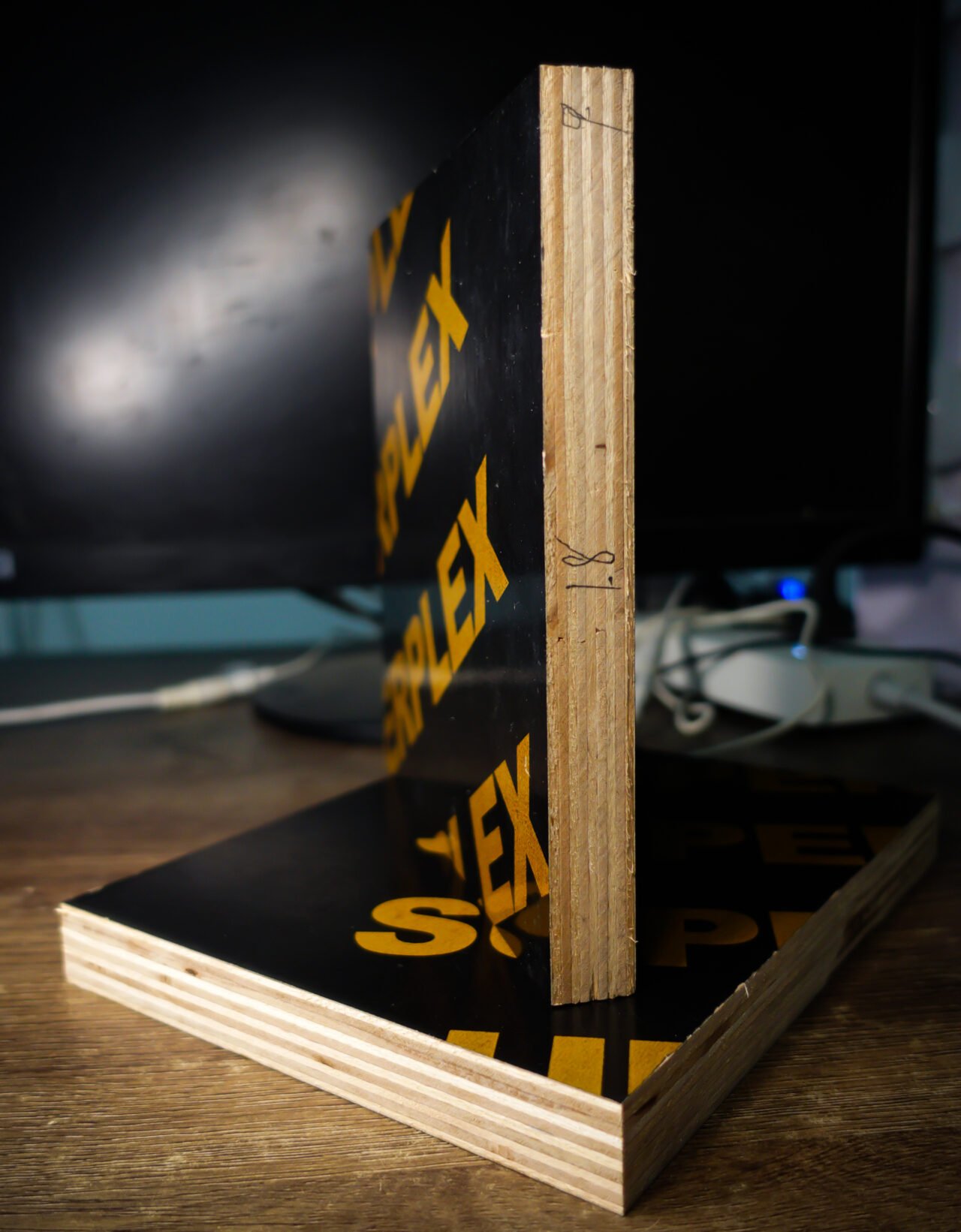
Bond Line Application in Heavy Shuttering: Fully reacted waterproof adhesives are critical for 18mm heavy-duty film-faced plywood manufactured by NQ Formwork Plywood Co., Ltd., ensuring zero blister peeling over 15 to 20 reuses in coastal bridge and marine infrastructure. For interior slab decks, 12mm red formwork boards utilizing enhanced melamine adhesive deliver 6 to 8 dependable cycles.
To observe laboratory glue synthesis and boiling shear strength testing, access our factory testing video stream, study our corporate manufacturing credentials, or request direct mill certification data.
🌐 Connect with NQ Formwork Plywood Co., Ltd.
-
Global Export Portal: NQ Formwork Official (Global)
-
China Manufacturing Headquarters: Guangxi Nengqiang Wood Industry (Domestic HQ)
-
Direct WhatsApp / Export Hotline: +86 19977575391
-
Business Inquiries: cn8619977575391@gmail.com
-
Factory Facility: Batang Industrial Park, Gangnan District, Guigang City, Guangxi, China