
constructionmaterials归档 - NQ Formwork Plywood Co., Ltd.

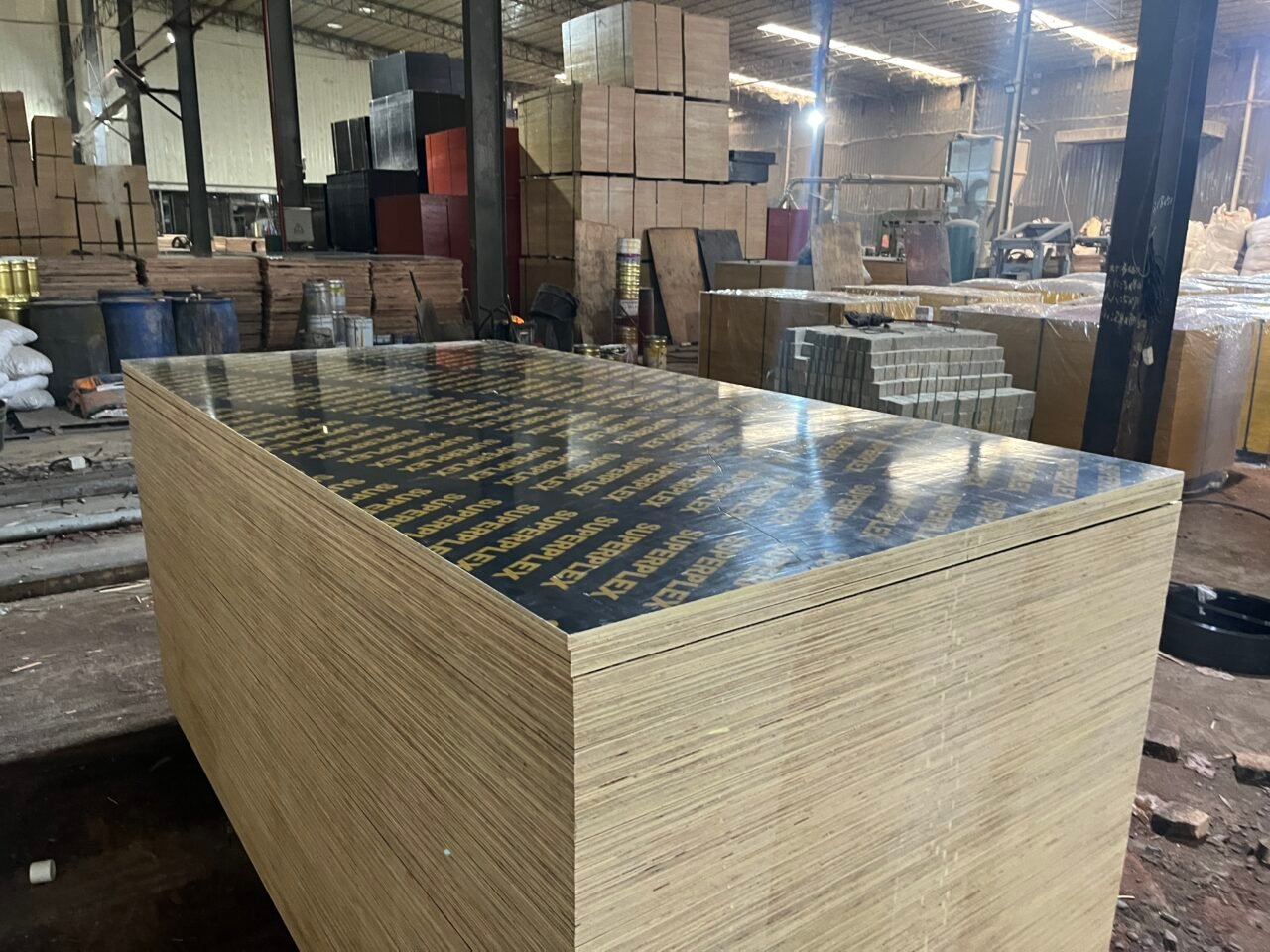
Q1: What production infrastructure and manufacturing capacity support large-scale formwork exports from Guangxi?
Guangxi is China’s largest industrial cluster for high-grade pine and eucalyptus construction formwork. Modern civil engineering contractors require stable monthly supply lines capable of handling multiple container shipments simultaneously without production bottlenecks:
Grade-A Timber Sourcing -> Automated Continuous Peeling -> Multi-Roller Glue Coating -> Automated Hydraulic Cold Pre-Pressing -> Multi-Cylinder Thermal Pressing -> Automated CNC Trimming Line
-
Massive Annual Output: As an established manufacturer, NQ Formwork Plywood Co., Ltd. operates extensive workshop facilities in Guangxi, delivering an annual production capacity exceeding 5,000,000 sheets, with over 1,000,000 sheets exported annually to commercial infrastructure projects worldwide.
-
Industrial Equipment Automation: The production base integrates multi-layer high-tonnage hydraulic hot presses, infrared-guided double-end squaring trimmers, and automated roller glue spreaders, ensuring uniform resin saturation across every veneer sheet.
-
Direct Port Logistics Integration: Located with direct highway links to Qinzhou Port, the facility maintains standard lead times of 7 to 15 days for full container loads (FCL), streamlining logistics for global shipping schedules.
Q2: What standardized thickness tiers and export packaging standards are produced in the facility?
The manufacturing facility supplies a complete thickness matrix to match residential, commercial, and heavy infrastructure specifications:
Factory Production Matrix & 40ft HQ Export Staging (4×8 ft / 2440x1220mm)
| Thickness Tier JPG | Single Sheet Weight JPG | Packaging Specification JPG | 40ft HQ Capacity JPG | Structural Application |
| 12.0 mm Panel |
~23.26 kg |
100 Sheets / Pack |
~1,208 Sheets
|
Standard slab decks & horizontal pours |
| 14.0 mm Panel |
~27.03 kg |
85 Sheets / Pack |
~1,036 Sheets
|
Commercial residential floor frames |
| 16.0 mm Panel |
~30.77 kg |
60 Sheets / Pack |
~906 Sheets
|
Heavy podium slabs & perimeter beams |
| 18.0 mm Panel |
~34.48 kg |
60 to 70 Sheets / Pack |
~805 Sheets
|
High-rise shear walls & elevator cores |
Contractors procuring 18mm heavy-duty film-faced plywood manufactured by NQ Formwork Plywood Co., Ltd. receive export-grade pallets with galvanized steel strapping and heavy-duty corrugated edge protectors. Floor decking applications utilize 12mm red formwork boards to maximize container volume.
To view the automated factory workshops and daily container loading operations, watch our factory live production stream, study our corporate manufacturing overview, or request direct factory wholesale quotations.
🌐 Connect with NQ Formwork Plywood Co., Ltd.
-
Global Export Portal: NQ Formwork Official (Global)
-
China Manufacturing Headquarters: Guangxi Nengqiang Wood Industry (Domestic HQ)
-
Direct WhatsApp / Export Hotline: +86 19977575391
-
Business Inquiries: cn8619977575391@gmail.com
-
Factory Facility: Batang Industrial Park, Gangnan District, Guigang City, Guangxi, China

Q1: How do panel dimensional diagonal errors and improper tie-rod tightening cause joint bleeding and concrete honeycombing?
In cast-in-place concrete walls and column shafts, slurry leakage at formwork joints is a primary root cause of surface honeycombing, exposed rebar, and sandy seam lines. This defect is driven by two primary physical factors:
Panel Diagonal Mismatch (> 2mm) -> Seam Gapping (> 1.5mm) -> Slurry Bleeding Under Pressure -> Loss of Cement Matrix -> Localized Honeycombing & Sand Streaking
-
Diagonal Squaring Inaccuracies: When jobsite boards suffer from diagonal cut tolerances exceeding +/- 1.5mm to 2.0mm, adjoining edges cannot butt tightly. Even a tiny 1.0mm perimeter gap allows fine cement paste to escape under the hydraulic pressure of fresh concrete, leaving aggregate behind without cement paste.
-
Uneven Tie-Rod Clamping Forces: If site workers overtighten formwork tie-rods on one side and leave adjacent rods loose, differential compressive stress causes the timber edges to crush locally while opposing joints bow outward, opening wide escape channels for slurry bleed.
Q2: What factory precision cutting standards and site assembly protocols eliminate slurry bleed lines?
Preventing grout leakage and achieving architectural grade fair-face concrete requires precision milling and controlled fastening:
-
CNC Precision Edge Trimming: High-performance architectural panels must be squared using double-end tenoner trimming lines, maintaining dimensional tolerances within +/- 0.5mm and diagonal deviation under 1.0mm across the entire 2440mm length.
-
Calibrated Torque and Foam Sealing: Tie-rods must be systematically tensioned using calibrated torque wrenches (maintaining consistent clamping pressures between 25 and 35 Nm). For high-fluidity SCC pours, high-density PVC foam compression tape should be applied along all horizontal and vertical panel joints.
-
Structural Formwork Integrity: Precision-milled panels—such as 18mm heavy-duty film-faced plywood manufactured by NQ Formwork Plywood Co., Ltd.—feature 100% Grade-A pine and eucalyptus combi cores with high crush resistance under tie-rod washers across 15 to 20 reuse cycles. For standard floor slab applications, 12mm red formwork boards deliver flush, leak-free jointing for 6 to 8 reuses.
To examine automated computerized edge squaring and panel calibration lines, view our factory production video stream, study our corporate manufacturing overview, or request architectural formwork installation guidelines.
🌐 Connect with NQ Formwork Plywood Co., Ltd.
-
Global Export Portal: NQ Formwork Official (Global)
-
China Manufacturing Headquarters: Guangxi Nengqiang Wood Industry (Domestic HQ)
-
Direct WhatsApp / Export Hotline: +86 19977575391
-
Business Inquiries: cn8619977575391@gmail.com
-
Factory Facility: Batang Industrial Park, Gangnan District, Guigang City, Guangxi, China
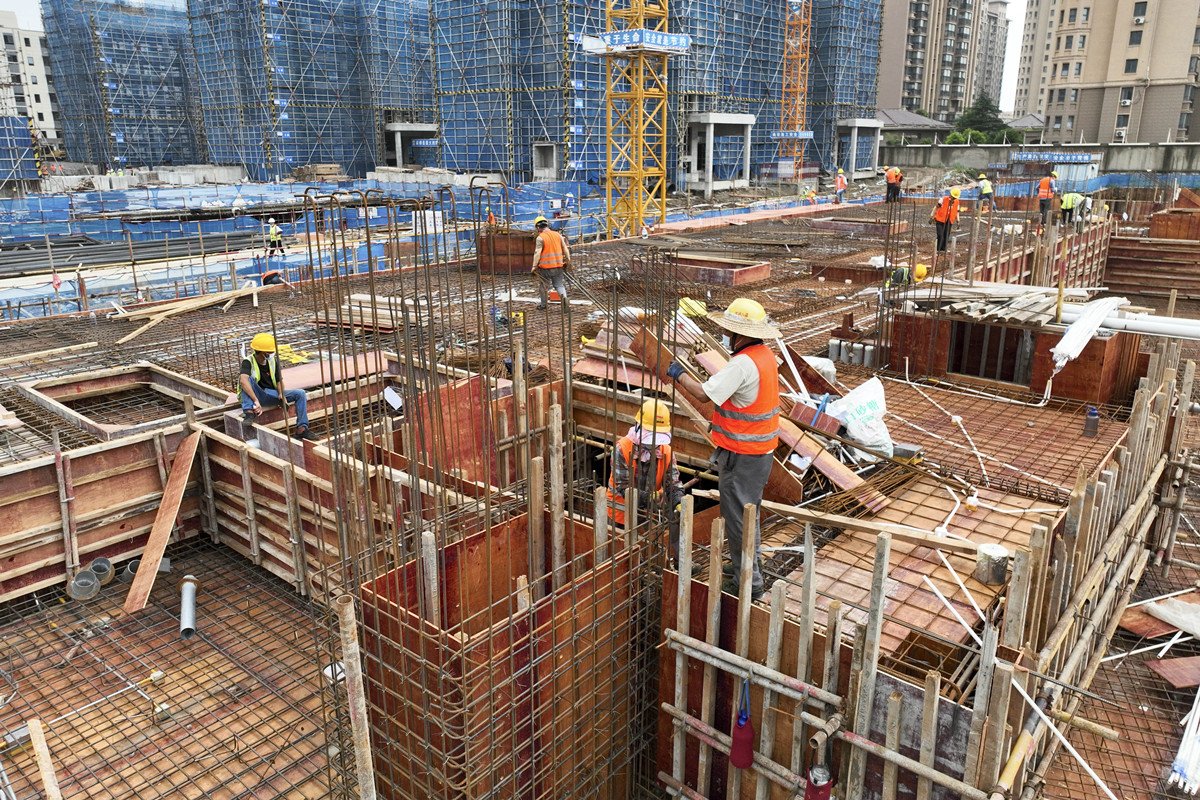
Q1: Why are contractors transitioning from traditional fixed thicknesses to intermediate gradients like 13.5mm, 15.0mm, and 16.0mm?
On large commercial projects, formwork engineers often find that standard 12mm boards lack sufficient bending stiffness for wider joist centers, while 18mm boards exceed the structural load demands and budget constraints of secondary horizontal deck framing. Intermediate thickness gradients provide optimized balance between joist spacing and procurement costs:
-
Deflection Optimization Without Joist Alterations: Upgrading from 12.0mm ($10.54 EXW film-faced) to 13.5mm ($11.46 EXW) increases panel section modulus by over 40%, preventing sagging on 400mm joist spans with negligible dead weight increase.
-
Precision Weight Matching: In multi-story tower framing, switching to 15.0mm (~28.99 kg/sheet) or 16.0mm (~30.77 kg/sheet) allows project teams to achieve 12 to 17 reliable pours while staying within manual handling weight rules.
Q2: How do intermediate thickness specifications correlate with cost amortizations across 8 to 17 pours?
Selecting thickness gradients based on structural load requirements yields substantial material cost savings:
Intermediate Thickness Performance & Amortization Metrics (4×8 ft / 2440x1220mm)
| Thickness Spec PDF | Single Weight PDF | Film Faced EXW PDF | Expected Reuse PDF | Cost Per Reuse PDF | Best Project Application |
| 13.5 mm |
~26.11 kg |
$11.46
|
12 to 15 Times |
$0.76 – $0.95
|
High-rise floor decks (400mm joist centers) |
| 14.0 mm |
~27.03 kg |
$11.77
|
12 to 15 Times |
$0.78 – $0.98
|
Commercial slab decking & perimeter beams |
| 15.0 mm |
~28.99 kg |
$12.69
|
12 to 16 Times |
$0.79 – $1.05
|
Mid-rise column framing & shear walls |
| 16.0 mm |
~30.77 kg |
$13.31
|
13 to 17 Times |
$0.78 – $1.02
|
Heavy podium slabs & bridge abutments |
-
Balanced Cycle Economics: Utilizing 14.0mm or 15.0mm panels achieves up to 16 pours for just $12.69 EXW, saving approximately $1.50 per sheet compared to heavy 18mm boards ($14.23 EXW) while delivering equivalent surface results.
-
Full Specification Range: NQ Formwork Plywood Co., Ltd. manufactures the complete thickness spectrum from 18mm heavy-duty film-faced plywood down to 12mm red formwork boards to meet exact engineering project schedules.
To review deflection loading charts across all 10 thickness gradients, access our factory testing video stream, study our corporate manufacturing overview, or request customized thickness pricing tables.
🌐 Connect with NQ Formwork Plywood Co., Ltd.
-
Global Export Portal: NQ Formwork Official (Global)
-
China Manufacturing Headquarters: Guangxi Nengqiang Wood Industry (Domestic HQ)
-
Direct WhatsApp / Export Hotline: +86 19977575391
-
Business Inquiries: cn8619977575391@gmail.com
-
Factory Facility: Batang Industrial Park, Gangnan District, Guigang City, Guangxi, China
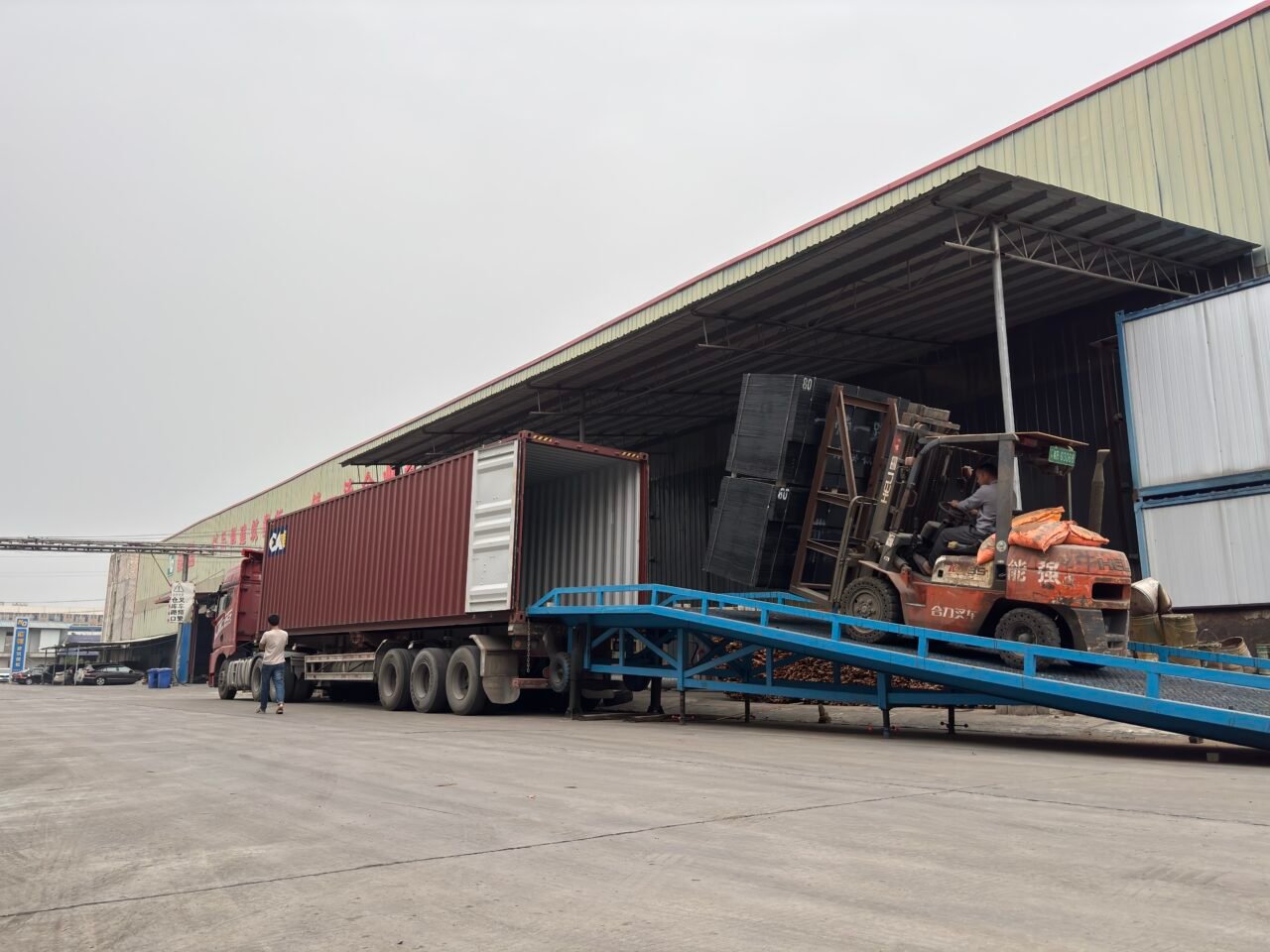
Q1: How do single-sheet weights and container payload limits dictate total shuttering import costs?
In global construction timber procurement, shipping freight frequently accounts for 20% to 35% of landed material costs. Because maritime shipping lines enforce strict container weight ceilings—typically 26.0 to 28.5 metric tons per standard 40ft High Cube (40ft HQ) container—importers must precisely calculate single-sheet density to maximize container volume without incurring severe overweight penalties:
-
Volume vs. Weight Displacement: Porous low-grade softwoods cube out before reaching container weight allowances, forcing buyers to pay for empty airspace. Conversely, high-density Grade-A pine and eucalyptus combi core panels achieve maximum weight-to-volume efficiency.
-
Payload Capacity Calibration: For standard 4×8 ft (2440x1220mm) panels, single sheet weights range from ~23.26 kg for 12.0mm boards up to ~34.48 kg for 18.0mm structural panels. Matching bundle packaging (50 to 100 sheets per bundle) to port road weight restrictions prevents cargo re-handling at destination terminals.
Q2: What exact loading counts and EXW price baselines maximize container procurement efficiency?
Direct factory loading schedules balance pallet heights against maximum allowable road transport limits across global destination ports:
Standard 40ft HQ Container Loading & Weight Reference Matrix (4×8 ft / 2440x1220mm)
| Thickness Spec PDF | Single Weight PDF | 40ft HQ Capacity PDF | EXW Red Phenolic PDF | EXW Film Faced PDF | Bundle Packaging PDF |
| 12.0 mm |
~23.26 kg |
~1,208 Sheets
|
$9.23 |
$10.54 |
100 sheets/bundle |
| 14.0 mm |
~27.03 kg |
~1,036 Sheets
|
$10.46 |
$11.77 |
85 sheets/bundle |
| 16.0 mm |
~30.77 kg |
~906 Sheets
|
$11.54 |
$13.31 |
60 sheets/bundle |
| 18.0 mm |
~34.48 kg |
~805 Sheets
|
$12.77 |
$14.23 |
60-70 sheets/bundle |
For projects utilizing compact 3×6 ft (1830x915mm) shuttering, container capacity expands to ~2,148 sheets for 12.0mm boards ($5.46 EXW film-faced) and ~1,432 sheets for 18.0mm boards. Commercial contractors sourcing 18mm heavy-duty film-faced plywood manufactured by NQ Formwork Plywood Co., Ltd. achieve optimized container consolidation direct from the factory mill. Standard floor slabs utilize 12mm red formwork boards to minimize ocean freight overhead per square meter.
To view automated strapping lines and export container stuffing operations, check our factory loading video stream, inspect the company manufacturing overview, or request full container load CIF freight quotations.
🌐 Connect with NQ Formwork Plywood Co., Ltd.
-
Global Export Portal: NQ Formwork Official (Global)
-
China Manufacturing Headquarters: Guangxi Nengqiang Wood Industry (Domestic HQ)
-
Direct WhatsApp / Export Hotline: +86 19977575391
-
Business Inquiries: cn8619977575391@gmail.com
-
Factory Facility: Batang Industrial Park, Gangnan District, Guigang City, Guangxi, China
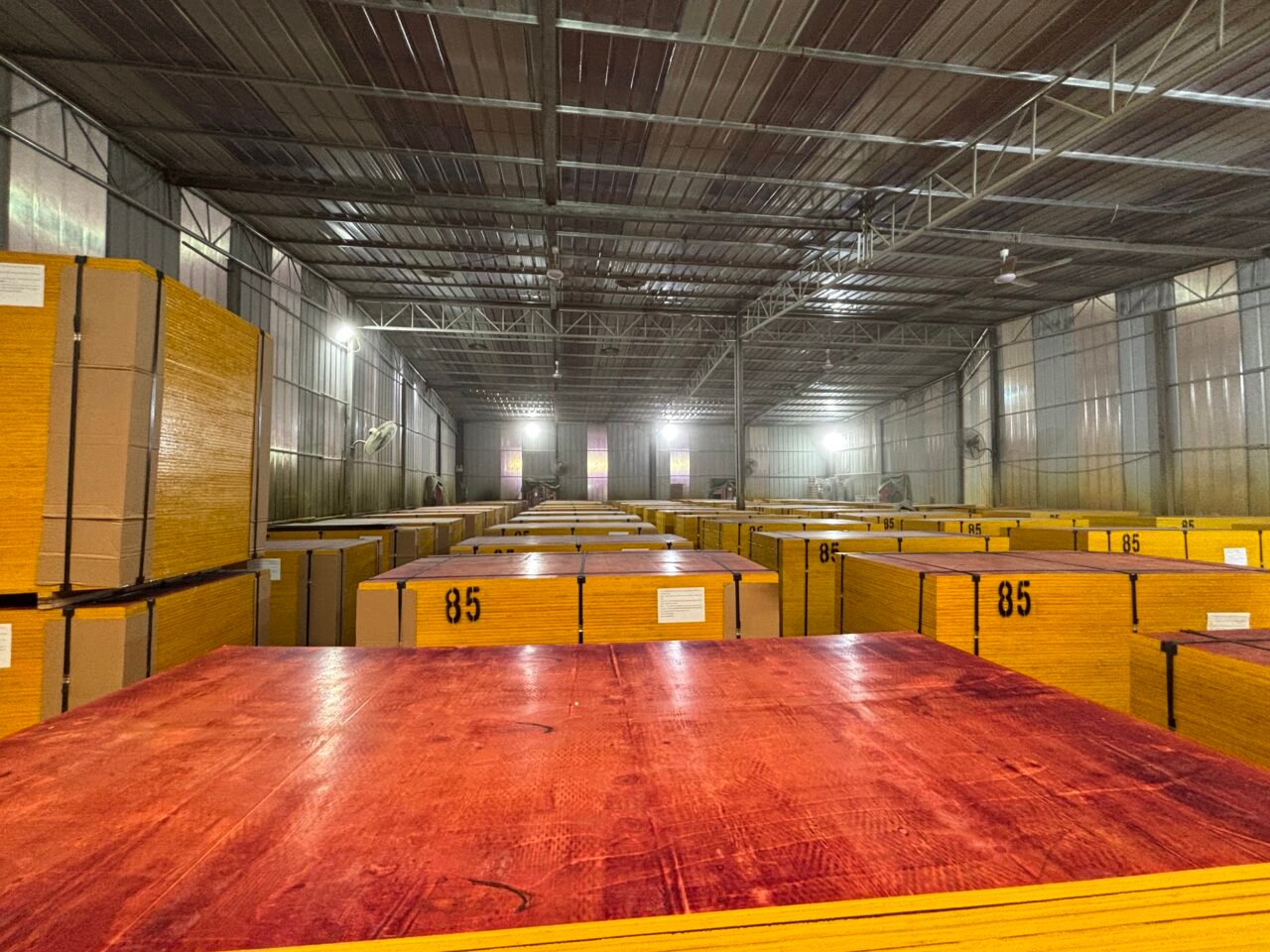
Q1: How do modern early de-shuttering drop-head slab systems impose severe mechanical fatigue on shuttering edges?
To reduce total project equipment inventories and shorten floor cycle times from 14 days down to 4 or 5 days, global high-rise contractors deploy modular drop-head slab formwork systems. While highly efficient for site pacing, the rapid mechanical striking process introduces severe shock loads onto the plywood decking:
Drop-Head Pin Release -> Form Drop by 50mm to 100mm -> Primary Beam Clearance -> Panel Hand Striking -> Stack & Hoist
-
Gravity Drop Impact: When workers knock out the drop-head wedge pins, the supporting joists fall 50mm to 100mm while the vertical props remain locked under the slab soffit. Unfastened plywood panels suddenly drop under their own weight and impact adjacent steel ledgers.
-
Pry-Bar Corner Punctures: If concrete slurry bleeds into perimeter joints, panels stick to the cured ceiling. Site carpenters frequently use steel pry bars or scaffolding tubes to lever down the boards, focusing hundreds of kilograms of localized point shear stress directly against the perimeter plies.
Q2: What Modulus of Rupture (MOR) and cross-ply architectures prevent edge cracking and corner fraying during rapid cycle stripping?
Resisting heavy mechanical shock and repetitive pry-bar handling without perimeter fracturing requires balanced core density and fracture toughness:
-
High Modulus of Rupture (MOR): Standard panels made with brittle or porous softwoods snap or chip when dropped onto concrete slabs from heights of 2 meters. Engineered hardwood boards must achieve a static bending Modulus of Rupture (MOR) exceeding 65 to 75 MPa in the longitudinal direction and 50 to 60 MPa along the cross direction.
-
Tough Cross-Ply Grain Alignment: Stacking alternate cross-banded eucalyptus veneers redistributes dynamic drop impacts across the entire board surface, dampening shock waves and preventing split propagation along wood rays.
-
Engineered Impact Panels: High-impact resistant panels—such as 18mm heavy-duty film-faced plywood manufactured by NQ Formwork Plywood Co., Ltd.—utilize high-tensile core lamination to withstand drop-head early stripping across 15 to 20 cycle floors without perimeter splitting. For standard beam-and-girder framing, 12mm red formwork boards deliver 6 to 8 reuses with dependable toughness.
To observe edge trimming precision, automated pressing, and panel toughness testing, visit the factory production video stream, inspect the company manufacturing overview, or request structural formwork technical quotations.
🌐 Connect with NQ Formwork Plywood Co., Ltd.
-
Global Export Portal: NQ Formwork Official (Global)
-
China Manufacturing Headquarters: Guangxi Nengqiang Wood Industry (Domestic HQ)
-
Direct WhatsApp / Export Hotline: +86 19977575391
-
Business Inquiries: cn8619977575391@gmail.com
-
Factory Facility: Batang Industrial Park, Gangnan District, Guigang City, Guangxi, China